How the Future of Private Investigations Changes with Email Tracking and SMS Tracing
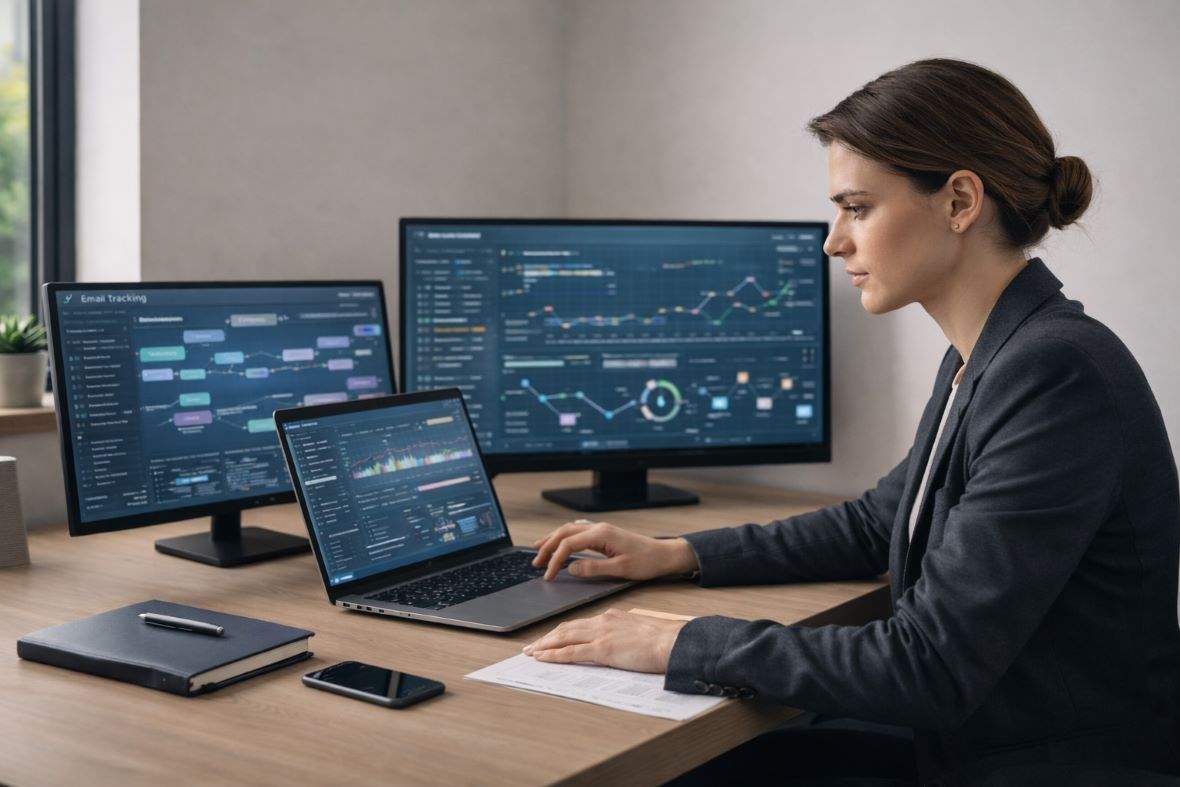
Modern investigations have shifted dramatically from the days of grainy photos taken from a parked car. While physical surveillance remains a core part of the job, the digital trail people leave behind often tells a more complete story. Today, private investigations use sophisticated tools like Email Tracking and SMS Tracing to uncover truths that were once hidden behind screens.
At some point, many people feel a quiet sense of unease; something doesn’t add up, and you may find yourself questioning whether you’re overthinking or if there’s actually proof to be uncovered. You might wonder if “private investigators can really track emails or texts?” In reality, email tracking and SMS tracing have become essential tools for bringing clarity without confrontation. This shift toward using such technologies is not merely about advancement for its own sake; it’s fundamentally about ensuring accuracy, legality, and proof that carries weight when it truly matters.
These methods allow professionals to gather evidence without ever needing to start an engine. Instead of relying solely on what someone does in public, investigators can now see who they’re talking to and when they’re active online. This move toward digital evidence isn’t just about convenience; it’s about accuracy. By integrating these technical strategies, investigators provide clients with a straightforward, data-backed narrative that holds weight in both personal and legal matters.
Modern Tools for Private Investigators
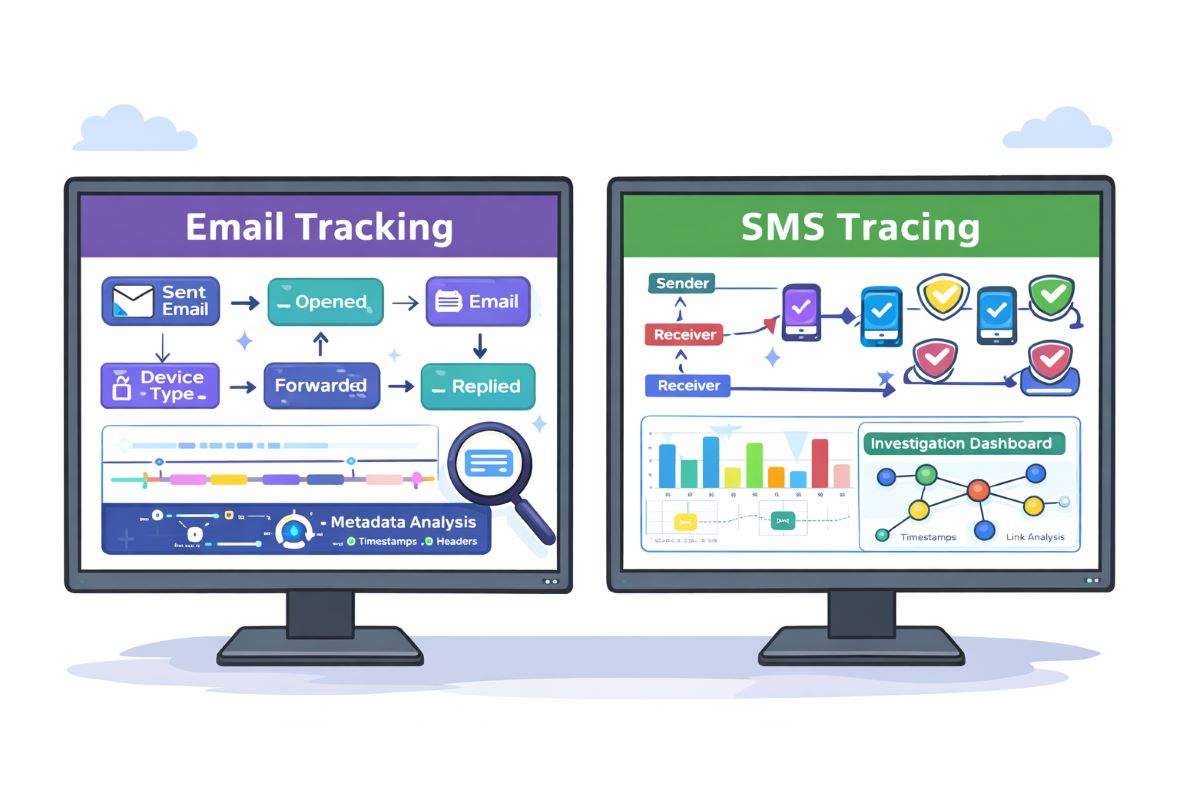
The transition into high-tech investigations has changed how you might think about surveillance. Traditionally, a “tail” meant an investigator physically following a subject in a vehicle, hoping to catch a revealing moment. Today, digital footprints provide a much richer source of information. These logs show exactly where someone has been and who they’ve been in contact with, without the risks of a physical tail. If you need to understand a person’s routine, their digital activity often provides a more reliable map than a single afternoon of observation.
People often ask, “What digital tools do private investigators actually use today?” The answer surprises many. Modern investigations are no longer limited to long hours sitting in a parked car. Digital activity now provides a richer and more reliable picture of behaviour than physical surveillance alone ever could.
High-tech tools allow for a level of discretion that traditional methods can’t match. When an investigator uses professional-grade real-time GPS trackers, they can monitor movements from a distance, ensuring their presence remains undetected. This same logic applies to communication. By analysing digital logs, a professional can see the frequency and timing of messages or emails. This data is difficult to ignore because it’s rooted in hard timestamps. It removes the guesswork from an investigation, replacing “maybe” with definitive proof of contact.
Investigators use lawful digital tools to analyse communication patterns, device activity, and movement data. This naturally raises another common question: do investigators still do physical surveillance, or is it all digital now? The truth is that both are used, but digital evidence often provides the foundation. Physical surveillance is then used to confirm or contextualise what the data already shows.
When clients ask what’s more reliable: following someone or tracking their digital activity? The answer is usually digital timelines. Emails and text messages leave timestamped records that are difficult to dispute. These records allow investigators to build clear timelines that show when someone was active, who they were communicating with, and whether their story aligns with reality.
How Email Tracking Works in Investigations
Email tracking is one of the most misunderstood investigative tools. Many people ask, is email tracking a real investigation tool or just a myth? In professional investigations, it is genuine and widely used.
A typical scenario involves disputes or denials. Clients often ask, “How can you prove someone opened an email but then denied it?” Investigators can lawfully track metadata that shows when an email was opened, which device accessed it, and, sometimes, the general location where it was opened.
This leads to another critical question: can a private investigator see when an email was opened? Yes, when done lawfully and for a legitimate investigative purpose. Email tracking does not mean reading private inboxes or hacking accounts. It focuses on verifying the “who, when, and where” of digital interaction.
Many clients also want to know “if email tracking is legal in Australia for investigations?” When conducted by a licensed investigator and in compliance with privacy laws, email tracking is a lawful method of evidence gathering. In fact, this data is often used to prove someone was active online at a time they claimed they weren’t, or that critical information was received and ignored.
The Role of SMS Tracing in Recovering Truth
Tracing text messages is another vital service. Licensed professionals use expert help with mobile activity tracing to verify where a message came from and where it was delivered. This is particularly useful in cases involving anonymous harassment or in finding a missing person who has gone off the grid. Unlike basic caller ID, professional tracing can often bypass spoofed numbers to see the actual source.
Text messages are often at the centre of emotionally charged situations. People dealing with harassment or threats frequently ask, “Can private investigators trace anonymous text messages? In many cases, yes.
Clients also worry about legality, asking, “Is it possible to trace texts without accessing someone’s phone? A professional investigation never involves breaking into devices. Instead, investigators rely on lawful records, metadata, and service-level information where permitted.
It’s crucial to remember that licensed professionals handle SMS tracing legally, ensuring compliance with privacy laws. This compliance reassures clients and investigators that digital evidence is obtained ethically, fostering trust and confidence in the process and its outcomes.
Future Trends in Digital Evidence
As we look toward the next few years, the role of artificial intelligence (AI) in private investigation will likely grow. Investigators often have to sort through thousands of data points from tracking logs and communication records.
As technology evolves, people naturally ask, how is AI changing private investigations? Artificial intelligence is already helping investigators analyse large volumes of data to identify patterns that would otherwise be missed.
AI identifies trends and connections humans may miss, such as a subject visiting a specific location on the third Thursday of each month or a sudden spike in email activity late at night. This doesn’t replace the investigator; it serves as a high-powered filter, making the final report much stronger.
The future also holds a delicate balance between better technology and evolving privacy laws. While tools are becoming more exact, the regulations protecting individuals’ data are also becoming more robust. This means the value of an experienced professional will only increase. You’ll need someone who knows how to navigate these rules while still getting the results you need. The goal is always to provide high-quality evidence without crossing legal lines that could ruin a case.
Improved Accuracy and Geolocation
The next wave of technology is poised to offer even more exact location reporting. Current geolocation can sometimes have a margin of error, especially in dense urban areas. Future advancements aim to reduce these errors, providing pinpoint accuracy. This level of detail helps clear innocent people much faster; if the data shows a person was miles away from an incident, that fact can be established quickly and with total confidence.
Digital Tools Driving Investigative Accuracy
Digital tools like Email Tracking and SMS Tracing are rapidly becoming essential in modern private investigations. These technologies provide a level of precision and insight that traditional surveillance alone cannot achieve. By analysing the digital footprints people leave behind, investigators can build robust, evidence-backed cases that hold up under scrutiny.
As technology evolves, people naturally ask, how is AI changing private investigations? Artificial intelligence is already helping investigators analyse large volumes of data to identify patterns that would otherwise be missed.
Clients also wonder, are email and SMS tracing becoming standard investigation tools? Increasingly, yes. These methods are now considered essential for accuracy, efficiency, and discretion.
Yet even with advanced tools, the human element remains critical. Skilled private investigators are needed to interpret the data, understand the context, and ensure every step complies with the law. While the methods have evolved, the core mission remains unchanged: uncovering the truth. Leveraging digital advancements delivers clearer insights, more reliable outcomes, and the confidence that comes from knowing your case is in capable hands. Establishing the facts is always the first step toward resolution.
Frequently Asked Questions
Is it legal for private investigators to use email tracking?
Yes, it’s legal when performed by a licensed professional for a legitimate investigation. Investigators must comply with privacy laws and ensure they aren’t hacking or accessing accounts without authorisation. Email tracking typically involves monitoring “read status” and metadata, which is a standard investigative practice.
Can SMS tracing find a deleted message?
Sometimes. While a message might be gone from a handset, traces often remain in the cloud or through service provider logs. A professional utilising cell phone records analysis has a better chance of recovering evidence than someone using consumer-grade apps.
Why is digital tracking better than old methods?
Digital tracking provides complex data and objective timestamps that are very difficult to argue against. Unlike a witness’s memory, which can be flawed, a digital log is a permanent record of an event. This makes the evidence much more potent for insurance claims or court proceedings.