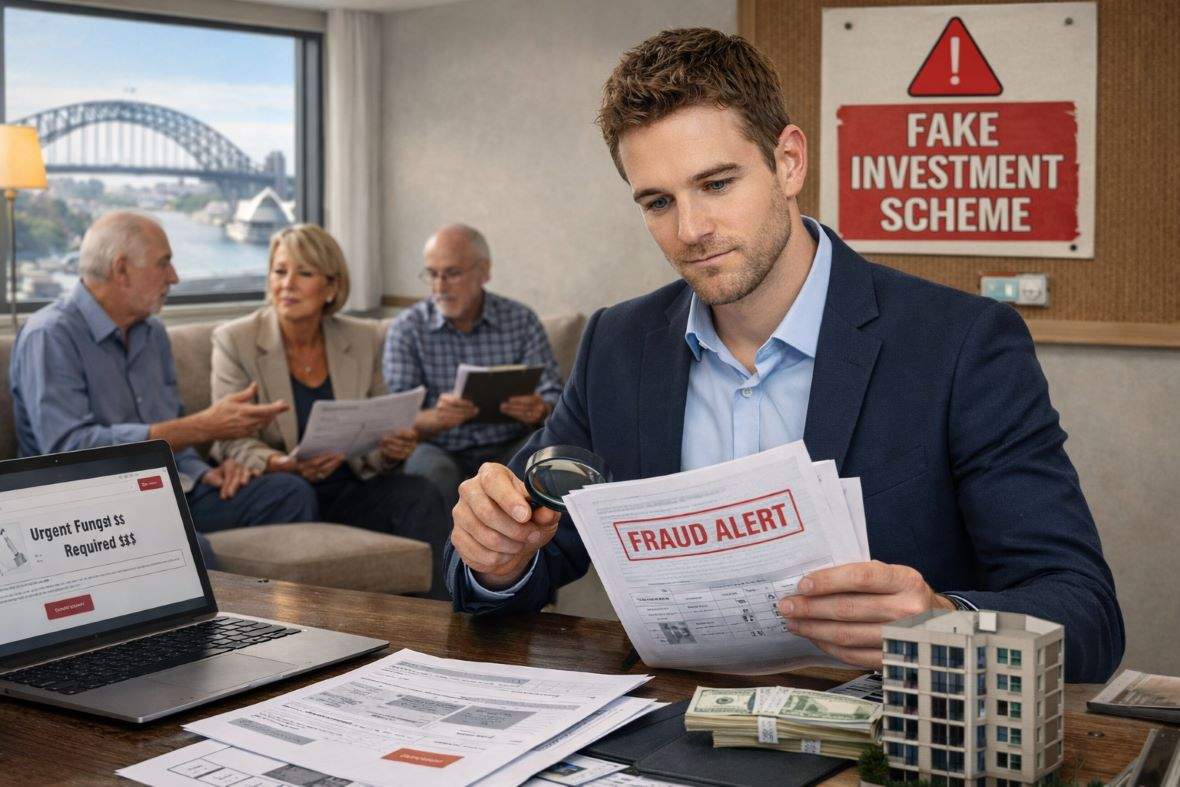
Booking short-term accommodation should feel straightforward, but for many travellers, the problem starts before check-in. The listing looks real, the photos are polished, the host is responsive, and the urgency feels believable. Then the payment request changes, the property is cancelled, the address does not exist, or the “host” turns out to be a scammer using stolen details or a fake listing. Recent reporting in Australia has shown a sharp rise in complaints involving online accommodation platforms, refund disputes, cancellations, misleading listings, and phishing-style payment requests aimed at travellers. NSW also maintains a formal complaint pathway for short-term rental accommodation matters, which reflects how common and serious these disputes have become.
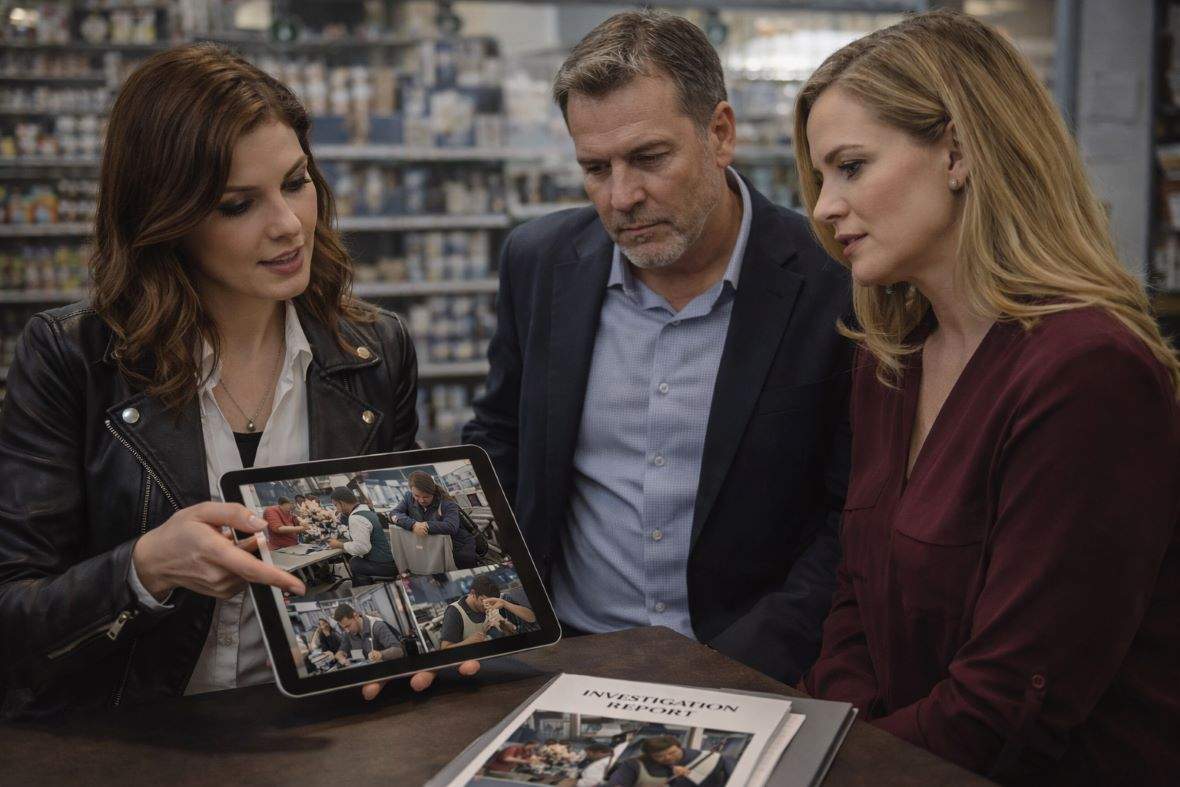
For Sydney travellers, the safest time to verify a listing is before sending money, not after the booking falls apart. A private investigator in Sydney is not a substitute for a platform dispute process or a regulator complaint, but can be useful when a traveller needs to test whether a listing, host, address, or payment request is genuine before taking the next step. The goal is not to overcomplicate a booking. It is to reduce the risk of paying for accommodation that does not exist, is misrepresented, or is part of a scam.

Why accommodation scams work so well
Accommodation scams work because they are built around urgency and trust. Travellers are often booking around fixed dates, flights, events, or family plans, so they feel pressure to secure the property quickly. A fake or misleading listing only has to look credible long enough for a deposit or full payment to be made. Recent Australian reporting has highlighted complaints about listings that did not match expectations, difficulty obtaining refunds, cancellations close to travel dates, and phishing attempts impersonating booking platforms or accommodation providers.
That is also why verification matters more than appearance. A polished listing is not proof that the property is real, available, lawful, or under the control of the person requesting payment.
The first thing to verify is the payment path
One of the clearest warning signs is a payment request that sits outside the normal booking flow or changes after the booking appears confirmed. Recent security warnings told customers to be cautious of emails or phone calls from people impersonating accommodation providers and made clear that legitimate providers should not be asking for credit card details over the phone, text, or WhatsApp, or for bank transfers that do not match the payment terms shown in the booking confirmation.
Before paying, check:
- whether the payment request matches the platform’s normal process
- whether the account name, bank details, or method changed after booking
- whether the message is pushing you to act quickly outside the platform
- whether the payment terms in the listing match the message you received
If the booking looks real but the payment path looks wrong, that is often the moment to stop.
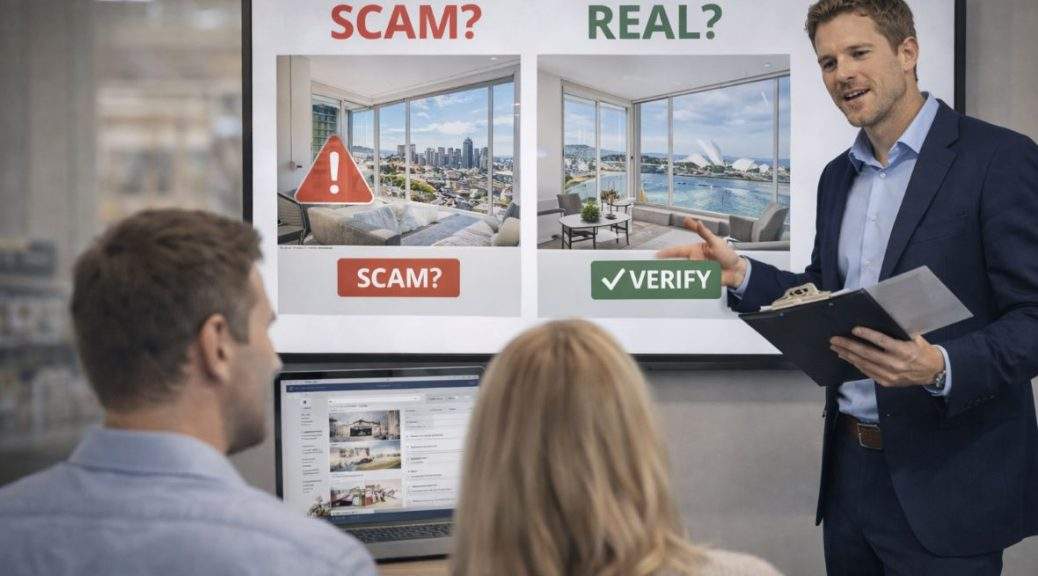
The second thing to verify is whether the listing and address make sense together
A real-looking property can still be misrepresented, duplicated, or controlled by the wrong person. Sydney travellers should compare the listing photos, map location, suburb description, and stated property type against what is publicly visible and internally consistent. A property described as a quiet Sydney apartment may in reality be a hotel room, a serviced apartment, a reused listing, or something that does not match the claimed location at all. Recent reporting has shown how travellers can end up in a “responsibility loop” in which the platform, host, and other parties push the complaint elsewhere once the problem arises.
Useful checks include:
- whether the address format looks real and complete
- whether the map pin and suburb description match each other
- whether the photos appear elsewhere online under another listing
- whether the amenities and room layout stay consistent across images and text
- whether the property is being advertised in a way that conflicts with local strata or short-term rental limits
The more expensive or time-sensitive the booking, the more important the basic cross-check becomes.
The third thing to verify is the host or operator story
A booking can look fine on the screen and still be controlled by someone who is not the real host. That risk becomes more serious when communication shifts quickly off-platform or when the “host” becomes unusually insistent, evasive, or inconsistent. Short-term rental rules in NSW also matter here. Complaints can be made about alleged breaches of the short-term rental code, and NSW maintains an exclusion register for hosts or guests banned after serious breaches.
Before paying, travellers should check:
- whether the host communication remains inside the platform, where possible
- whether the operator’s name, contact pattern, and property story stay consistent
- whether the listing is connected to a lawful short-term rental setup rather than a vague, shifting arrangement
- whether there are signs that the host profile is newly created, thin, or disconnected from the property being offered
If the host’s identity is becoming less clear as the payment request grows more urgent, that is a detail not to ignore.
Why Sydney travellers should be extra careful with “too good” urgency
Scam listings often rely on artificial scarcity: one room left, discounted only today, special rate if you pay now, last-minute direct transfer to hold the booking. In normal travel planning, urgency is common. In scam behaviour, urgency is used to stop checking. Recent accommodation and platform reporting in Australia has shown that many customers only realised something was wrong after they had already paid, travelled, or tried to get a refund.
A useful rule is simple: if a deal only works when you cannot verify it, it is not a safe deal.
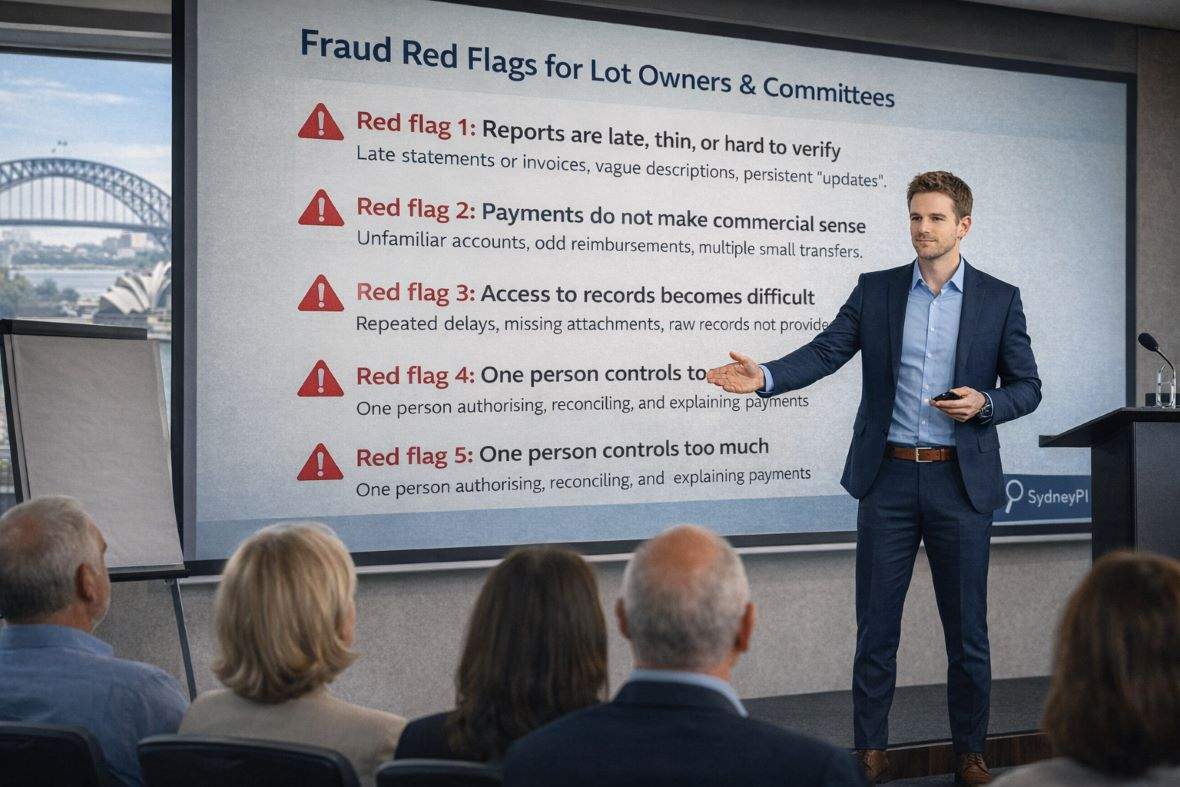
When a private investigator can help before payment
Hiring a private investigator can be beneficial in situations where the booking is high-value, time-sensitive, inconsistent, or crucial enough that the potential cost of making a mistake outweighs the expense of verifying it beforehand. This is particularly important for business travel, family vacations, long stays, corporate accommodations, or premium short-term rentals in Sydney, where a last-minute failure can result in significant financial or reputational consequences.
A lawful pre-payment check may help verify:
- whether the property appears to be a real, active location
- whether the operator or contact story is consistent
- whether the payment request fits the listing and booking terms
- whether the same photos, wording, or property identity appear elsewhere in ways that suggest duplication or misuse
- whether the issue looks more like misrepresentation, platform confusion, or a possible scam
The value is not in turning a holiday booking into a major investigation. It is in avoiding a preventable loss before money is sent.
What to do if you have already paid
If money has already been sent, move quickly. Save the listing, screenshots, confirmation emails, messages, payment details, and any later changes in communication. Recent complaints and support pathways make clear that documentation matters when travellers need to escalate a short-term accommodation problem. NSW provides a complaint pathway for short-term rental accommodation matters, and current platform-related reporting indicates that travellers often need a clear record of what was promised, what changed, and who said what.
At that stage, practical steps may include:
- preserving all screenshots and messages
- contacting the platform through its official support pathway
- contacting your bank or card provider if payment fraud is suspected
- lodging a complaint where the issue falls within NSW short-term rental complaint handling
- avoiding further payment requests until the matter is independently verified
Conclusion
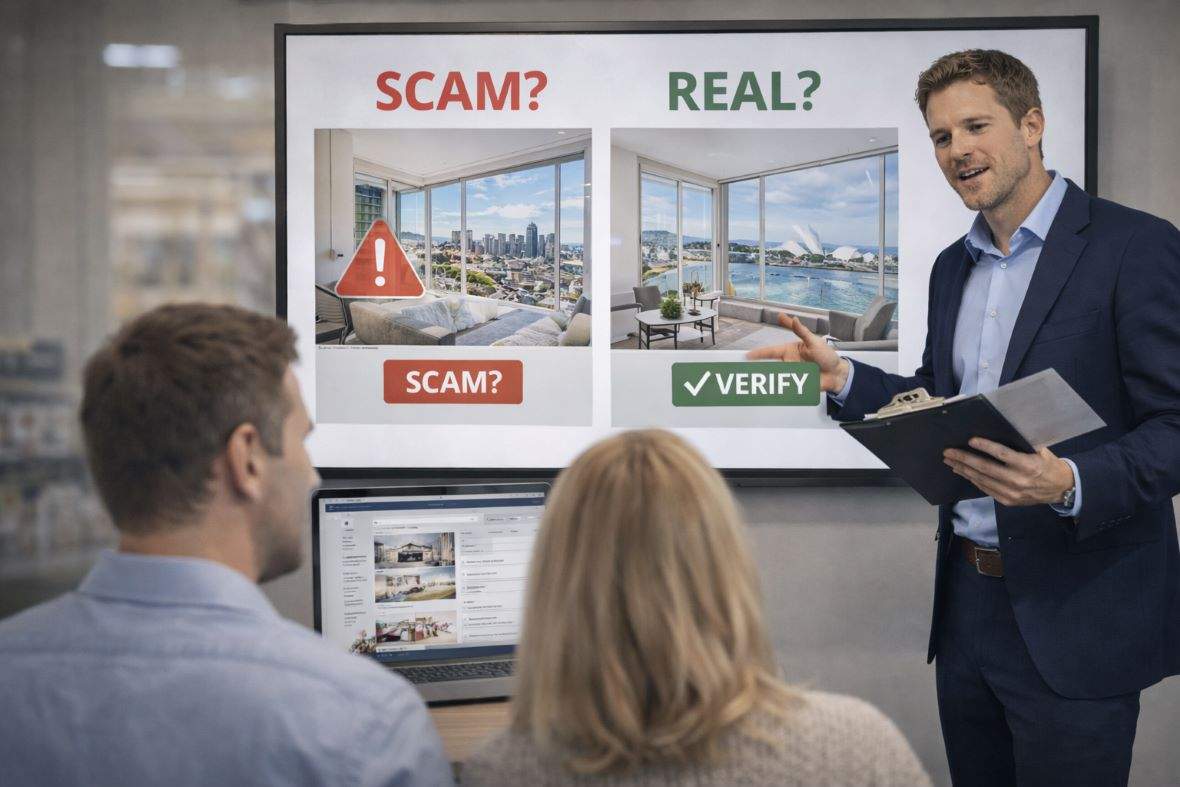
For Sydney travellers, the question is not only whether a short-term accommodation listing looks real. It is whether the payment path, property details, address, and host story all hold together before money leaves your account. That is where most booking scams and misleading listings begin to unravel. The safest approach is to verify before urgency takes over. When the listing, payment request, and operator identity all make sense together, the booking is easier to trust. When they do not, stopping early is usually cheaper than fixing the problem later.
FAQs
1. What is the biggest red flag in an accommodation booking scam?
One of the clearest red flags is a payment request that moves outside the normal booking process or changes after the booking appears confirmed.
2. Can a listing be real but still be a problem?
Yes. A real property can still be misrepresented, wrongly advertised, cancelled unfairly, or controlled by someone other than the genuine host or operator.
3. What should I save if I think the booking is a scam?
Save the listing, screenshots, messages, payment details, confirmation emails, and any changes to the booking or payment instructions.
References
ABC News. (2026, March 28). Booking.com under fire as hundreds of complaints lodged with Fair Trading. https://www.abc.net.au/news/2026-03-29/booking-com-complaints-accommodation-fair-trading/106423580
ABC News. (2026, April 13). Booking.com warns customers of possible data and security breach. https://www.abc.net.au/news/2026-04-13/booking-com-data-security-breach-personal-details/106557630
NSW Government. (n.d.). Short-term rental accommodation complaints and enquiries. https://www.nsw.gov.au/departments-and-agencies/fair-trading/complaints-and-enquiries/travel/short-term-rental-accommodation
NSW Government. (n.d.). Short-term rental accommodation. https://www.nsw.gov.au/housing-and-construction/short-term-rental-accommodation
NSW Government. (n.d.). Short-term rental accommodation exclusion register. https://www.nsw.gov.au/housing-and-construction/short-term-rental-accommodation/exclusion-register
ABC News. (2024, August 21). How to know if your accommodation booking is a scam. https://www.abc.net.au/news/2024-08-22/how-to-know-if-your-accommodation-booking-is-a-scam/104255250