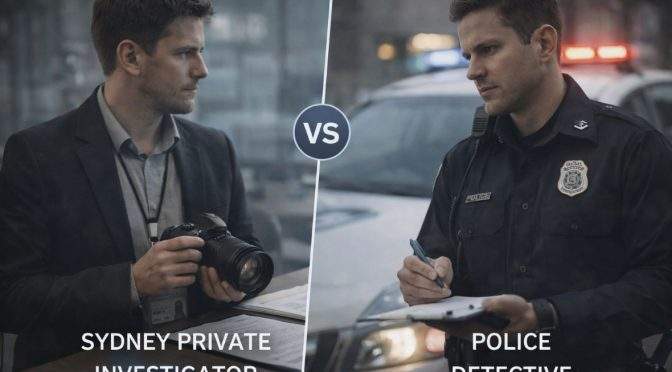
Imagine you suspect someone is stealing inventory from your warehouse, but you don’t have enough proof to call the authorities. On the other hand, consider a situation where a violent assault occurs outside a local shop. In the first case, you might look for a professional to watch the premises quietly; in the second, you’d expect a team of uniformed officers to arrive immediately.
People often confuse a private investigator with a police detective because both roles involve gathering facts and solving mysteries. However, the reality is that they operate in completely different worlds with very different rules. This guide explains who they work for, what powers they hold, and which one you should contact when things go wrong. Whether you’re looking for a PI Australia or trying to understand the justice system, knowing these differences is essential.
Who they work for and what their job is really about
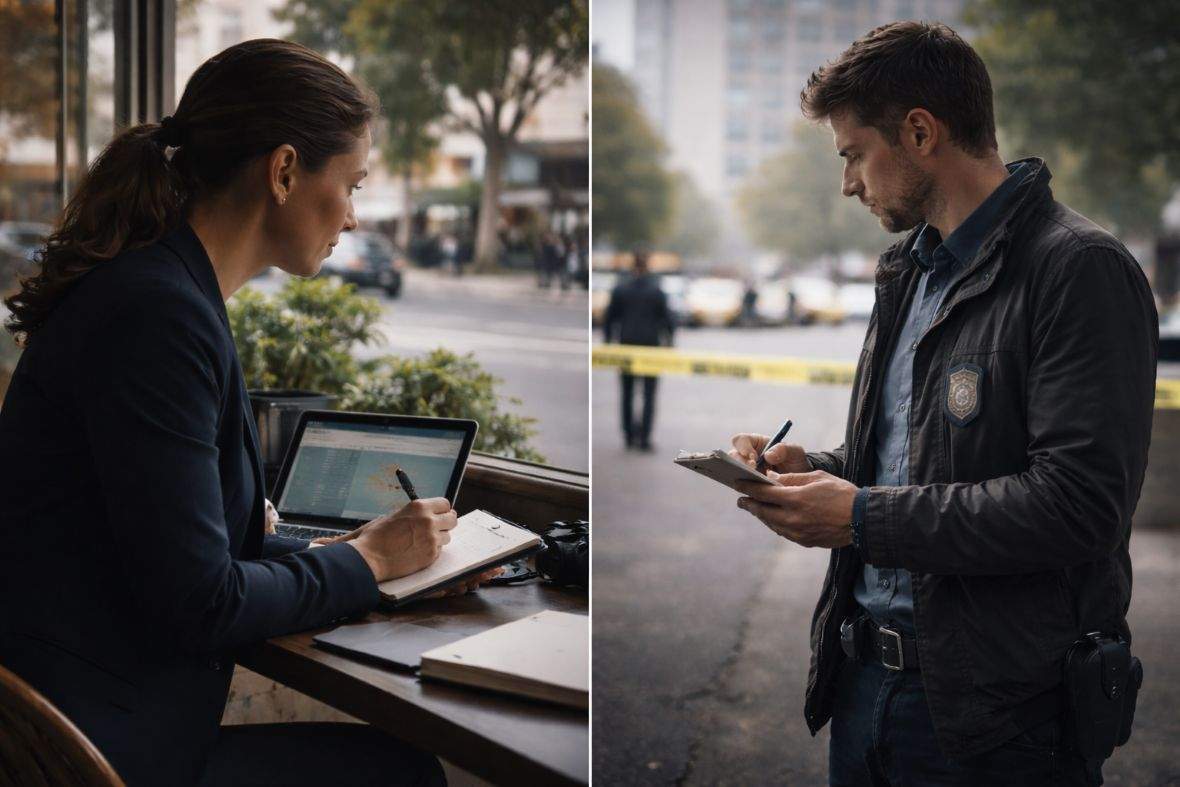
The most fundamental difference between these two professionals is their employers. A police detective is a government employee. They represent the state and their primary mission centres on public safety. When a crime occurs, their goal is to identify the perpetrator, gather evidence for a criminal trial, and ensure that justice serves the community. They don’t choose their cases; they respond to reports of illegal activity. Their loyalty is to the public interest and the statutory legal system.
In contrast, a private investigator is a specialist hired by a private individual, a business, or a law firm. You can think of a PI as a client-focused problem solver. If you hire one, their loyalty is to you and your specific needs. They provide information that helps you make informed personal or business decisions. A private investigator often tackles issues that aren’t necessarily “crimes” but still require a professional eye to resolve.
| Feature | Police Detective | Private Investigator |
| Employer | Government / Public | Individuals / Businesses |
| Primary Goal | Criminal Conviction | Information & Fact-finding |
| Funding | Taxpayer Funded | Client Funded |
| Selection | Assigned by the State | Hired by the Client |
While both professions use investigative skills, police focus on punishing lawbreakers, while PIs focus on providing clarity to their clients.
The goals and types of cases each one usually handles
Police detectives focus almost exclusively on criminal matters. You’ll see them leading investigations into serious offences such as:
- Physical assaults and robberies.
- Homicides or suspicious deaths.
- Large-scale drug trafficking and organised crime.
- Property crimes like home burglaries or car thefts.
A private investigator spends their time on a wider variety of civil and administrative issues. Their daily work might include:
- Family Law: Locating a person who is avoiding child support or documenting behaviour for custody disputes.
- Corporate Matters: Investigating internal employee theft, doing background checks on new hires, or uncovering insurance fraud.
- Personal Concerns: Finding proof of a cheating spouse or locating a long-lost family member.
- Civil Litigation: Helping lawyers find witnesses or identify assets during a lawsuit.
Where a private investigator fits in (and when hiring one makes sense)
There are many times when the police simply cannot help you. Police departments have limited resources, so they must prioritise violent crimes and immediate threats to the public. If your problem is a civil matter, such as a business partner who isn’t being honest, the police will likely tell you it’s a “civil dispute” and won’t investigate.
This is where hiring a private investigator adds immense value. A PI can dedicate 100% of their time to your specific case. They are particularly useful for gathering documentation, building timelines, and performing surveillance that the police don’t have the man-hours to handle. If you need facts to win a court case or just peace of mind, a PI provides the legwork the government won’t.
Powers, limits, and rules: what they can and cannot do
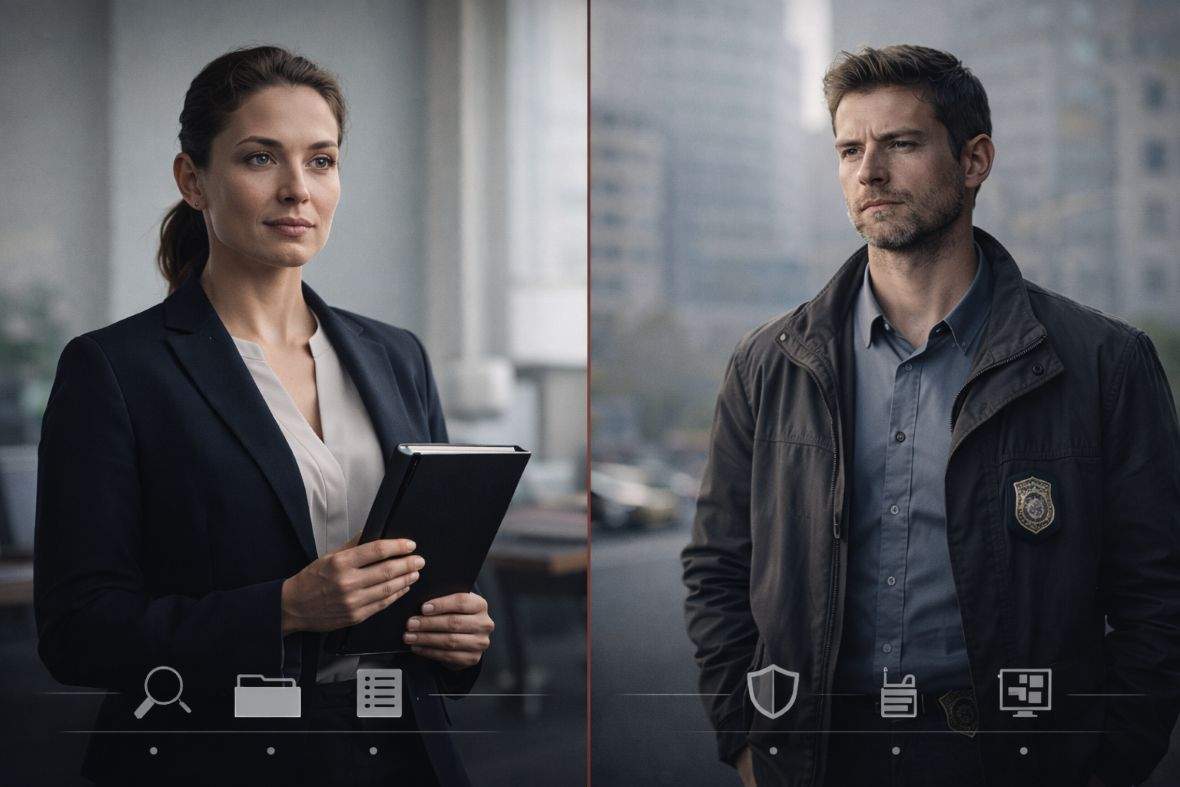
The gap between these two professionals is largest when it comes to legal authority. Police detectives have “police powers,” meaning the law grants them special authority to perform their duties. They can apply for search warrants to enter private property or get court orders to tap phone lines. They carry a badge and a firearm because their work involves confronting potentially dangerous criminals. What private investigators can and cannot legally do is governed by much stricter boundaries than those that apply to everyday citizens.
Private investigators in Sydney are highly trained professionals, but they don’t have the authority to break the law in the name of an investigation. They must follow the same trespass and privacy laws as everyone else. If a PI steps onto private land without permission or hacks into a private email account, they are committing a crime. Their strength lies in their ability to access legally available information through public records, open-source intelligence, and legal surveillance.
Can a PI arrest someone, carry a badge, or get warrants?
The short answer is no. A PI cannot walk into a house with a “warrant” they wrote themselves. Only a judge can issue a warrant to the police. Similarly, a PI should never present themselves as a police officer; doing so is a serious criminal offence called impersonation. In Australia, PIs don’t carry weapons or wear uniforms.
While a PI can technically perform a “citizen’s arrest” if they witness a crime, this is extremely rare and risky. In most cases, a PI will simply record the evidence and call the police to make the arrest. Surveillance is the most common tool a PI uses, but it must be done from public spaces where there is no “reasonable expectation of privacy.”
Licensing and training for PI Australia
Professionalism is maintained through strict licensing. In Australia, the police and PIs follow very different paths. To become a police detective, an individual must first serve as a sworn uniformed officer for several years before specialising. They undergo government training that covers everything from firearms to forensic law.
To work as a PI in Australia, an individual must hold a valid license issued by their state or territory government. This usually requires completing a specialised course, such as a Certificate III in Investigative Services. Applicants undergo thorough background checks and fingerprinting to ensure they have no criminal history. This ensures that when you hire a professional for your case, you are working with someone who understands the ethical and legal limits of the job.
Who should you call first? Quick scenarios and costs
Making the right choice depends on the nature of your problem. Since police services are taxpayer-funded, there is no direct cost to you when reporting a crime. However, you have no control over the timeline or the depth of the investigation. When you hire a private investigator, you pay for their time and expertise, but you get a dedicated professional who provides regular reports, photos, and updates.
Key Takeaway: Call the police for immediate danger or public crimes; call a PI for private interests, civil evidence, or when the police lack the resources to assist you.
A simple decision guide for common situations
- Immediate physical danger or stalking: Call the police immediately.
- Suspected employee embezzlement: Call a PI for internal fact-finding first, then the police if you want to press charges.
- Concerns about a spouse’s behaviour: Call a private investigator.
- For a missing child or a person at high risk: Call the police first; a PI can assist with additional hours of search time.
- Worker’s compensation or insurance fraud: Call a PI to conduct surveillance and gather photographic evidence.
- Historical assault with no current evidence: Call the police to report it, then consult a PI to help locate old witnesses for your lawyer.
Final Thoughts on PI and police detective
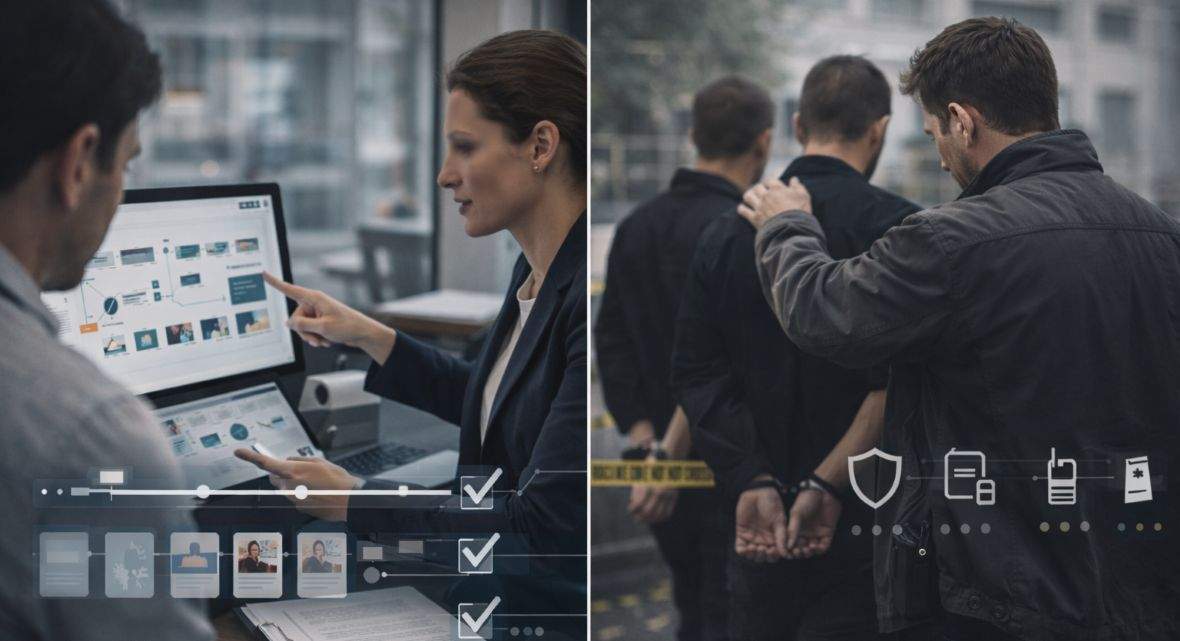
The difference between these two roles comes down to who they serve and what they are allowed to do. Detectives represent the government and focus on public justice. A private investigator represents you and focuses on your specific needs. While the police have the power to arrest and search, the PI has the time and focus to dig into personal or business issues that the state might overlook. If there is a crime in progress or someone is in danger, call the police. If you need facts, documentation, and a dedicated partner for a private matter, a licensed investigator is the right choice.
FAQ: PI and police detective questions people ask most
Do private investigators work with police detectives?
Sometimes they do, but they usually stay in their own lanes. If a PI finds evidence of a serious crime while working for a client, they can share that information with the police with the client’s consent. The police then decide whether to use that information to start their own official investigation.
Can a police detective take on a private case after hours?
Generally, no. Most police departments have strict rules against “moonlighting” as a private investigator because it creates a massive conflict of interest. A police officer cannot use government databases or their badge for private profit. If you have a private matter, you should always hire a licensed PI.
Will a PI’s evidence hold up in court in Australia?
Yes, as long as it was gathered legally. Professional investigators are careful to document their findings in accordance with legal standards. If a PI follows the law, their notes, photos, and testimony can be very powerful in both civil and criminal court proceedings.