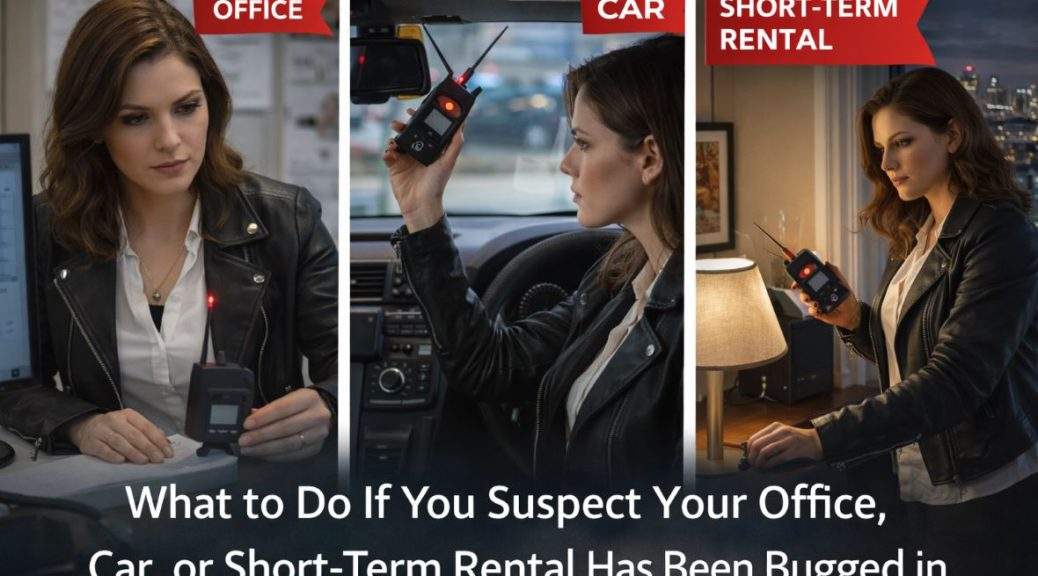
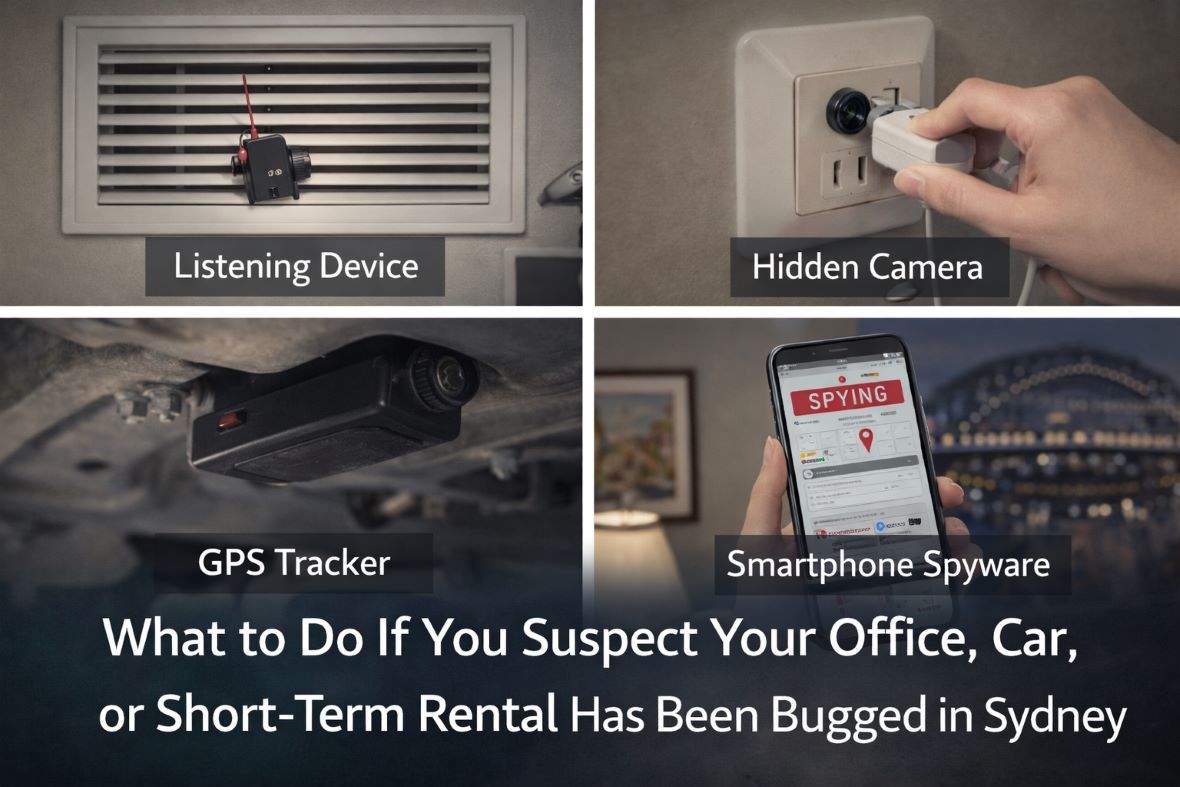
Suspecting that your office, car, or short-term rental has been bugged can prompt people to do the wrong thing quickly. They start pulling apart smoke alarms, unplugging routers, accusing staff, or confronting hosts before they have worked out whether the issue is a lawful disclosed monitoring setup, an insecure smart device, or potentially unlawful surveillance. In New South Wales, surveillance is not an unregulated grey area. The Surveillance Devices Act 2007 (NSW) regulates listening, optical, tracking, and data surveillance devices, and its stated objects include protecting privacy from unnecessary intrusion. In workplaces, the Workplace Surveillance Act 2005 (NSW) separately regulates camera, computer, and tracking surveillance of employees.
The practical lesson is simple: do not treat every camera, sensor, or strange coincidence as proof of illegal bugging, but do not ignore a credible pattern either. In Sydney, the safest first response is usually to prioritise immediate safety, preserve what you have found, and separate lawful, disclosed monitoring from suspected covert surveillance before taking the next step.
First, decide whether this is a safety issue, an evidence issue, or both
If you feel unsafe right now, or you think the suspected device is linked to stalking, threats, coercive control, or a person who may escalate, treat it as a safety issue first. eSafety says that if you are in Australia and in immediate danger, call Triple Zero (000). If it is not an emergency, but there are threats to your safety, eSafety and NSW Police both direct people to 131 444 for non-urgent police assistance. eSafety also says police may be able to record your complaint even if the matter is still developing, which can help if the behaviour continues or worsens.
As a practical matter, that means you should think in this order:
- Am I safe staying here or returning here?
- Do I need police or urgent support first?
- Can I preserve what I noticed without destroying it?
- Do I need a lawful technical check rather than guesswork?
Do not start with confrontation or a DIY “bug hunt”
When people panic, they often destroy the very record they may later need. eSafety’s guidance on collecting evidence stresses preserving evidence early, because once material is deleted, blocked, or altered, it may disappear. It also advises using a safe device if you think you may be monitored or tracked. That guidance is aimed at tech-based abuse, but the same logic applies here: preserve first, then assess.
That usually means:
- taking photographs of what you found in place
- noting the date, time, room, vehicle area, or exact location
- recording who had access to the area
- saving screenshots of unusual app access, device notifications, or account changes
- avoiding unnecessary tampering unless there is an immediate safety reason to leave or disconnect something
That last point is partly a practical inference, but it follows directly from the evidence-preservation logic in eSafety’s guidance and the fact that police, eSafety, and Fair Trading may later request supporting documentation.
In an office, not every visible camera means the workplace has been “bugged”
This matters because many concerns about Sydney offices are really misunderstandings about what lawful workplace surveillance looks like. Under section 10 of the Workplace Surveillance Act 2005 (NSW), surveillance of an employee must not commence without prior written notice, usually at least 14 days beforehand, and that notice must state the kind of surveillance, how it will be carried out, when it starts, and whether it is continuous or intermittent. AustLII’s text of section 11 also shows that camera surveillance has additional requirements, including clearly visible signs at each entrance to the area under surveillance. Covert surveillance of employees is prohibited without a covert surveillance authority.
So if your concern is an office:
- check whether there is an existing surveillance policy
- look for written notice already issued to staff
- check whether visible signage is present where cameras operate
- ask whether the issue is a visible, notified workplace system or a suspected hidden device in a private or sensitive space
That distinction is crucial. A CCTV system that is disclosed in a reception area is one thing. A suspected hidden microphone in a meeting room, executive office, or private interview room is another.
If you suspect a hidden audio or visual device in an office, the legal risk is real
The Surveillance Devices Act 2007 (NSW) makes it an offence to knowingly use a listening device to overhear, record, monitor, or listen to a private conversation in circumstances caught by the Act. It also prohibits installation or use of an optical surveillance device on or within premises or a vehicle where doing so involves entry without consent or interference with the vehicle or object without consent. Sections 11, 12, and 14 of the Act also create offences around communicating, possessing, or publishing material obtained from unlawful surveillance.
That means if you suspect a hidden device in an office, the safest next step is usually not to circulate recordings, forward clips to half the company, or start your own covert counter-surveillance. It is to preserve the scene, limit access, and get legal or investigative advice before the issue becomes both an original surveillance problem and a secondary evidence-handling problem.
In a car, think beyond a physical tracker
A Sydney driver who feels watched often assumes there must be a physical tracker in the vehicle. Sometimes that is true. Sometimes it is not. Under section 9 of the Surveillance Devices Act 2007 (NSW), a person must not knowingly install, use, or maintain a tracking device to determine the location of a person without that person’s consent, or of an object without the consent of the person in lawful possession or control of that object, subject to exceptions in the Act.
But modern vehicles complicate the picture. The Australian Cyber Security Centre’s guidance on connected vehicles explains that many modern vehicles connect to the internet through an inbuilt SIM or a paired smartphone, and that common features can include remote access, smartphone-as-key functions, over-the-air updates, and remote control features. In other words, a person who feels tracked through a vehicle may be dealing with a hidden device, a compromised app, shared account access, or insecure connected-car features rather than one obvious gadget under the chassis.
For suspected vehicle surveillance, sensible first steps are:
- note who has had lawful access to the car and its keys
- check whether connected-car apps or account credentials are shared
- document unusual notifications, remote-start events, or access alerts
- avoid attaching your own tracker or retaliatory device
- consider a lawful professional inspection if the concern is credible
If the concern involves a short-term rental, document first and escalate through the right channel
A short-term rental creates a different problem because you are dealing with a temporary premises, a host or letting agent, and often a platform. NSW has a mandatory Code of Conduct for the short-term rental accommodation industry, and Fair Trading says complaints may require supporting material such as photos, security camera footage, police statements, or other relevant documentation. Fair Trading also states that some matters may need to be dealt with by NSW Police, local council, or the owners corporation where relevant.
So if you suspect your Sydney short-term rental has been bugged:
- photograph the suspected device in place
- record the room and the exact position
- keep booking details, host messages, and check-in instructions
- avoid arguing about the law before you have documented what you found
- consider reporting through the platform and, where appropriate, Fair Trading or police depending on the seriousness of the issue
This is one reason short-term-rental complaints can benefit from disciplined evidence collection. Fair Trading’s own complaint process shows that documentation matters.
Smart devices can be the issue even when there is no “spy gadget”
Sometimes the concern is not a classic planted bug at all. The ACSC notes that IoT devices include security cameras, and its guidance recommends checking whether the device password can be changed, whether the manufacturer provides updates, whether unnecessary features such as cameras or microphones can be turned off, and whether Wi-Fi and router security are properly configured. That advice is general cyber hygiene, but it is especially relevant in short-term rentals, offices, and vehicles where internet-connected devices blur the line between security technology and privacy risk.
That is also why a good response is usually two-track:
- physical assessment of the premises, room, or vehicle
- digital assessment of apps, accounts, passwords, Wi-Fi, and connected devices
When a Sydney private investigator can help
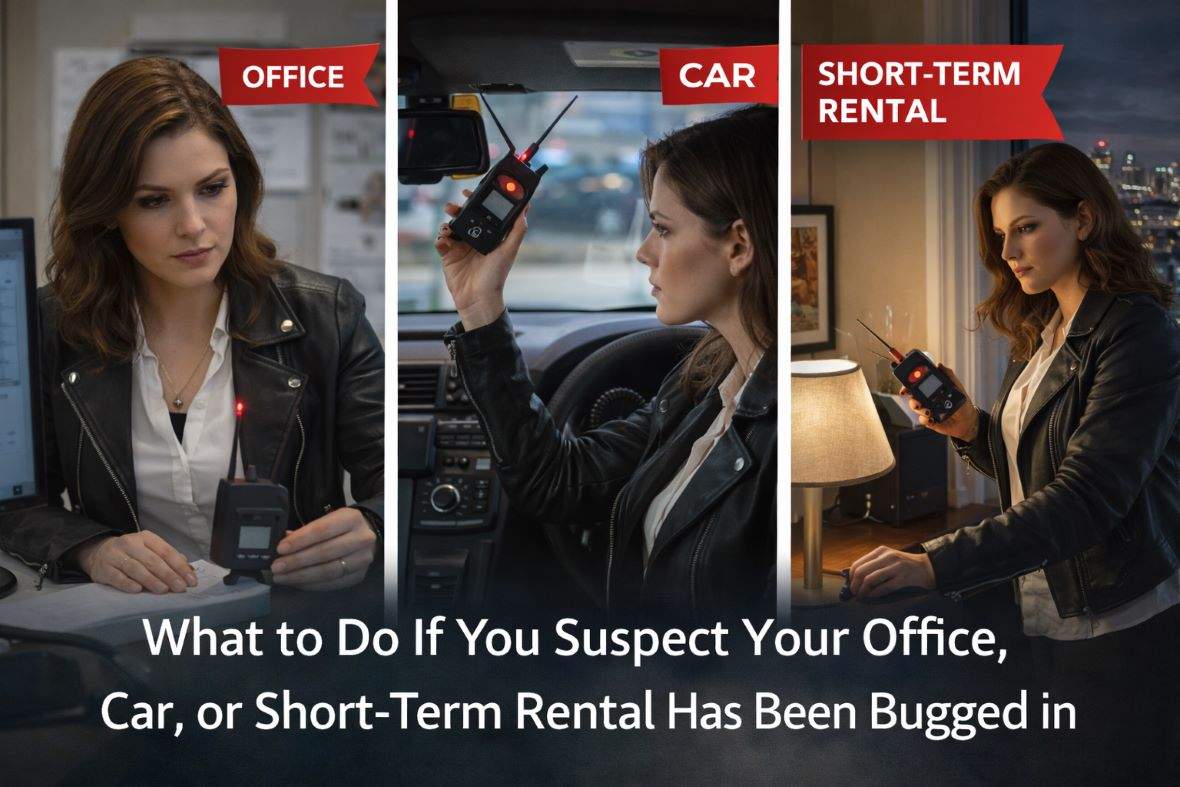
A private investigator in Sydney can be useful when the problem has moved beyond suspicion and into evidence, safety, or decision-making. NSW Police’s licensing information shows that Class 2E is the relevant private investigator licence class in NSW. For a client, that matters because you want someone operating inside a recognised regulatory framework, not someone improvising with their own unlawful gadgets or “secret tricks.”
A lawful investigator may be useful where you need:
- an independent inspection and documentation process
- help preserving a chronology of access, discovery, and related events
- a distinction between disclosed workplace monitoring and suspected covert surveillance
- assistance organising material before you speak to police, a lawyer, Fair Trading, or management
What a reputable investigator should not do is encourage you to break into accounts, plant your own tracker, secretly record everything “just in case,” or otherwise step outside NSW surveillance law.
Conclusion
If you suspect your office, car, or short-term rental has been bugged in Sydney, the best first move is usually not a dramatic sweep. It is a controlled response: secure yourself, preserve the scene, document what you found, and work out whether you are looking at lawful disclosed monitoring, insecure smart tech, or something that may amount to unlawful surveillance. NSW law clearly regulates listening, optical, tracking, and workplace surveillance, and the right path can quickly become a police matter, a Fair Trading complaint, a workplace law issue, or a private investigation brief depending on the facts. The value is not in panicking faster. It is in acting more carefully, while the evidence still exists.
This article is general information only and is not legal advice.
FAQs
1. If I find a camera or microphone in my Sydney office, does that automatically mean it is illegal?
No. Some workplace surveillance is lawful in NSW if employees have been given prior written notice and other requirements are met, including signage for camera surveillance. The issue is whether the monitoring was properly disclosed and authorised, or whether it appears to be covert or otherwise outside the law.
2. Can I put a tracker on my own car to find out who is watching me?
Be careful. Section 9 of the Surveillance Devices Act 2007 (NSW) regulates tracking devices and consent. In a suspected-surveillance situation, retaliatory tracking or improvised counter-measures can create a fresh legal problem.
3. What should I save before I report a suspected bug in a short-term rental?
Save photos of the device in place, booking details, host messages, dates, times, and any related footage or documentation. NSW Fair Trading says short-term-rental complaints may require photos, security camera footage, police statements, or other relevant documentation.
References
Australian Cyber Security Centre. (2026). Internet of Things devices. Cyber.gov.au.
Australian Cyber Security Centre. (2025). Introduction to connected vehicles. Cyber.gov.au.
eSafety Commissioner. (2023). How to collect evidence.
eSafety Commissioner. (2025). Collecting evidence safely.
eSafety Commissioner. (2025). How to get police and legal help for adult cyber abuse.
New South Wales Government. (n.d.). Surveillance Devices Act 2007 (NSW).
New South Wales Government. (n.d.). Workplace Surveillance Act 2005 (NSW).
NSW Government. (n.d.). Short-term rental accommodation complaints and enquiries.
NSW Government. (n.d.). Code of conduct for the short-term rental accommodation industry.
NSW Police Force. (n.d.). Class 2 licences.
NSW Police Force. (n.d.). Report.