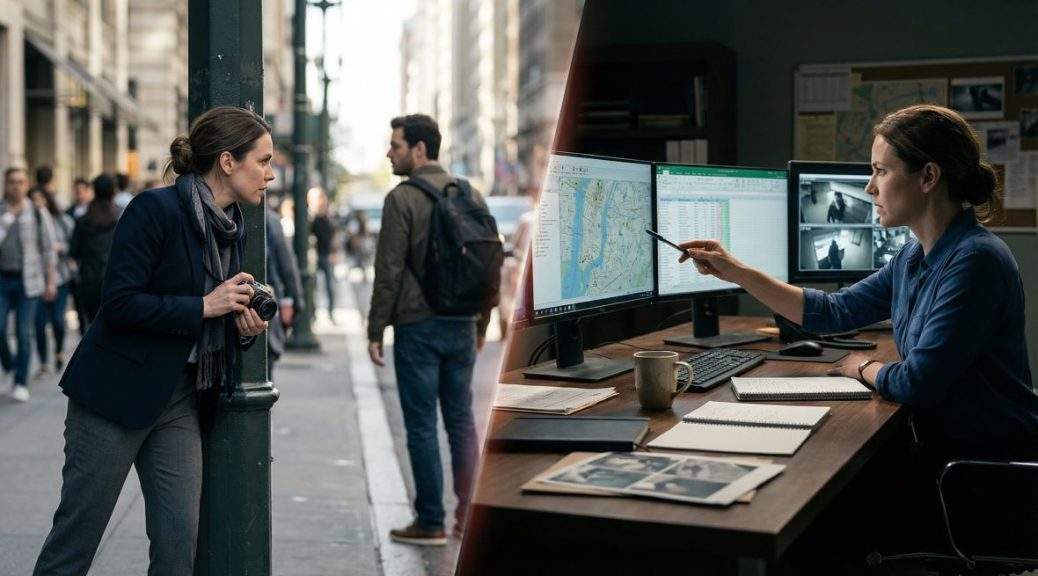
A Background Investigation is what you do when the stakes are real: hiring a senior employee, starting a serious relationship, choosing a business partner, or preparing for a legal matter. It’s less like a quick Google search and more like inspecting a used car before you drive it off the lot. You’re looking for proof, not promises. You can learn a lot about someone in five minutes online. You can also learn the wrong things, fast.
Sometimes, standard databases and “instant reports” are enough for basic screening. Other times, they miss key records, confuse people with similar names, or pull old data without context. That’s when working with a Private Investigator can be the safer option, because a professional focuses on verified facts, proper documentation, and lawful methods.
What a Private Investigator Does for Background Investigation
A professional Background Investigation isn’t just about finding dirt. It’s about reducing uncertainty.
When you hire a Private Investigator, you’re paying for a disciplined process that checks claims, tests consistency, and spots patterns that don’t fit. A good investigator treats the work like building a timeline: each record, statement, and document should support the story or raise a straightforward question.
You will receive a higher standard of reporting. Details matter, dates are essential, and sources are crucial. If your case could lead to court or a workplace dispute, having proper documentation can be just as important as the facts themselves. To fully grasp the broad responsibilities of a private investigator, it’s essential to understand the different roles they play.
Verifying Education and Work History
Resumes can be honest and still be misleading. A title might be inflated, dates might be “rounded,” or a degree might be described in a way that sounds better than it is.
A Private Investigator can verify education and employment claims using lawful sources and, when available, direct confirmation methods. This can include checking whether an institution exists as stated, whether the qualification matches the claim, and whether the work history holds together when you compare roles, timelines, and references.
Why does this matter? Because trust is built on specifics. If someone lies about something easy to check, you have to ask what else they’ll bend when the pressure rises. In business, a small lie can lead to significant losses. In personal life, it can lead to years of regret.
Checking Court Records and Legal Past
Court records are often public, but they aren’t always easy to find. Many people assume everything shows up on the first page of search results. It doesn’t.
A Private Investigator knows how to look across multiple jurisdictions and record systems, and how to confirm you’ve found the right person. That last part is where DIY searches often fail. Similar names, old addresses, and missing middle initials can create false matches that damage reputations or cause you to make the wrong call.
A proper Background Investigation may cover criminal and civil court history, restraining orders where accessible by law, bankruptcies or insolvency indicators (when relevant), and patterns like repeated disputes with partners, employers, or creditors. The goal isn’t to label someone based on a single event; it’s to understand risk through context and repetition.
Why Professional Background Investigations Beat DIY Searches

DIY background checks can feel like ordering fast food: quick, cheap, and satisfying in the moment. The problem is you don’t always know what you didn’t get.
A professional Background Investigation is built around accuracy, lawful access, and transparent decision-making. Investigators also recognise that records are messy. People move, change names, use nicknames, run businesses through related entities, or leave a trail that only makes sense when you connect the dots.
Here’s what a pro typically adds that a $20 website can’t.
Access to Special Databases and Tools
Professionals often use paid data tools, structured search systems, and specialist methods to validate identity and relationships. That can include advanced data analysis to spot links between people, addresses, phone numbers, or companies that don’t show up in a basic search.
In more complex matters, an investigator may also coordinate with specialist services (such as surveillance support or technical expertise) when it’s lawful and relevant. The key is that these services should have clear procedures, defined roles, and proper controls around sensitive information, because sloppy handling can ruin a case and expose you to risk.
It also helps that trained investigators think in “proof standards.” If the result needs to support a formal complaint, a workplace decision, or legal action, the investigation should be planned with that standard in mind, not patched together after the fact.
If your situation involves carefully choosing methods, this breakdown of restrictions on private investigation activities can help you set realistic expectations.
Legal Obedience and Proper Handling
A professional investigation isn’t only about what you find, it’s about how you find it.
Investigators should operate in accordance with relevant laws, regulations, and codes of conduct. That means acting reasonably, making defensible decisions, and documenting actions so the process can be explained later. When privacy laws apply (in Australia, that includes the Privacy Act 1988), a compliant approach matters because the wrong step can create legal trouble or make information unusable.
Good practice also includes:
- Planning before action: deciding what you’re trying to prove, what sources are lawful, and what steps won’t compromise the matter.
- Evidence handling discipline: keeping records organised, tracking sources, and maintaining a transparent chain of custody for both physical and digital material.
- Disclosure awareness: if a matter could go to court, disclosure duties can apply, and you don’t want surprises because material was lost, mishandled, or never recorded.
- Quality checks: internal reviews (self, peer, supervisor) at set points, plus periodic independent audits in higher-risk environments, help catch mistakes early.
There’s also a human factor. In high-stakes work, best practice often assigns more than one investigator so decisions don’t rely on a single viewpoint. That reduces bias and improves reliability, mainly when interpretations differ.
Final Thoughts Behind the Background Investigation
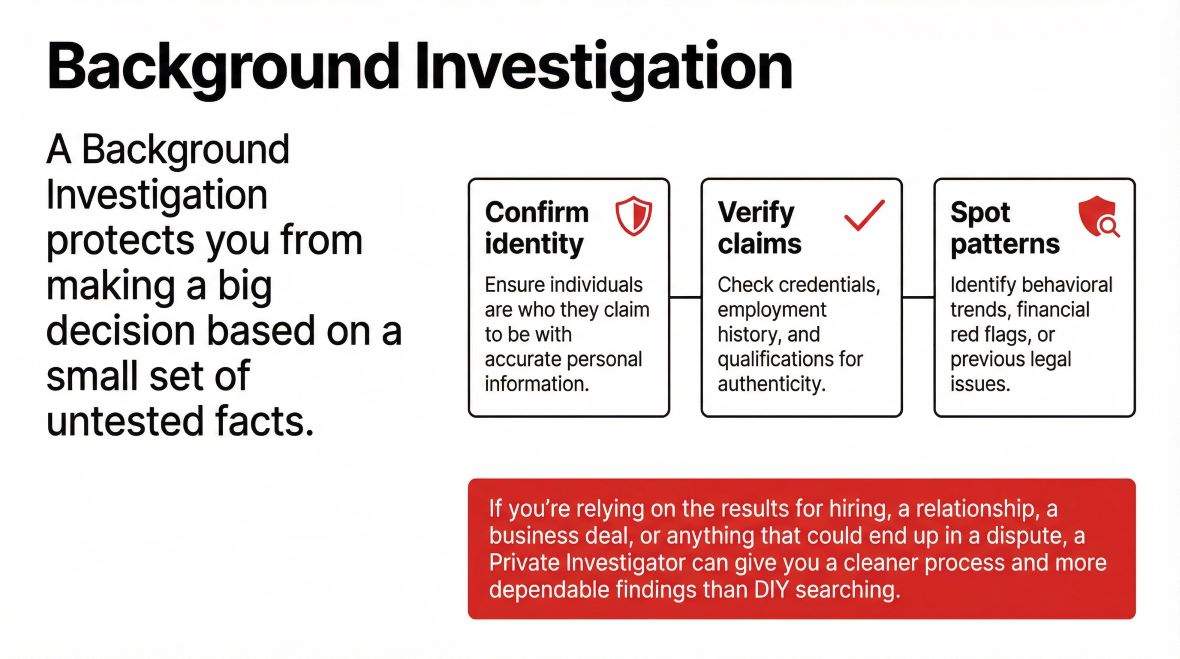
A Background Investigation protects you from making a big decision based on a small set of untested facts. It helps you confirm identity, verify claims, and spot patterns that change how you assess risk.
If you’re relying on the results for hiring, a relationship, a business deal, or anything that could end up in a dispute, a Private Investigator can give you a cleaner process and more dependable findings than DIY searching.
What is a background investigation, and how is it different from a basic background check?
A background investigation goes beyond quick online searches or instant reports. It focuses on verifying identity, confirming claims, and reviewing records in context using lawful methods, rather than pulling untested or outdated data.
When should I consider hiring a Private Investigator for a background investigation?
You should consider hiring a Private Investigator when the stakes are high, such as hiring a senior employee, entering a serious relationship, choosing a business partner, or preparing for a legal or workplace matter where accuracy is critical.
Can online background check websites give reliable results?
Online databases can be helpful for basic screening, but they often miss records, confuse people with similar names, or lack context. A Private Investigator checks accuracy, resolves conflicts, and confirms the information belongs to the correct person.