How top Private Investigator teams verified AI leads, step by step
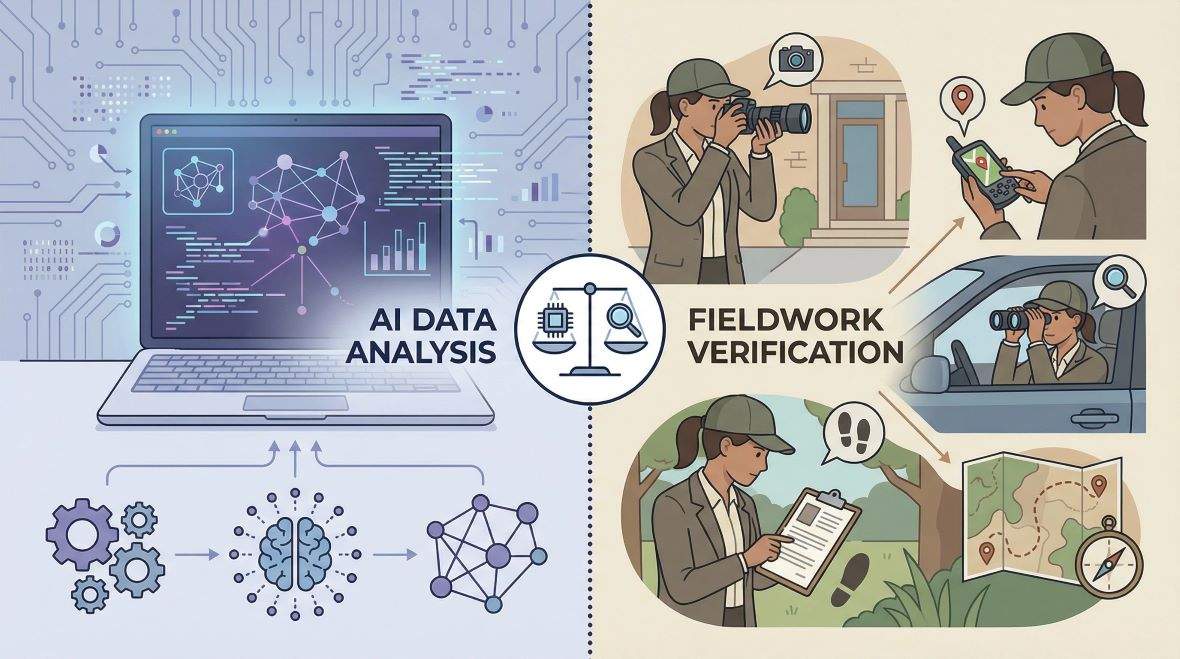
When you’re under pressure, you need a repeatable workflow you can run without overthinking. In 2025, the best teams came back to three pillars: verification, field checks, and corroboration.
Here’s a practical flow you can apply to your next matter:
- Write the claim in one sentence (example: “Subject lives at X address”).
- List what would prove it (a record, observation, statement, or a combination).
- Identify the risks (same-name, old data, spoofed accounts, motivated witnesses).
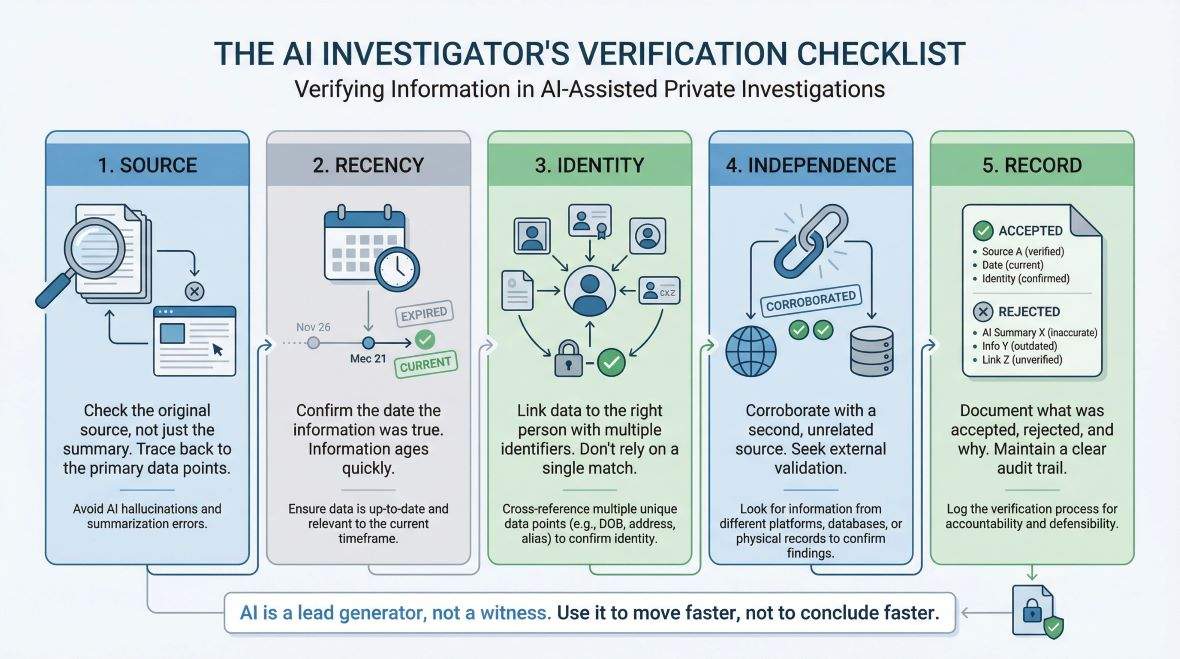
- Confirm identity first (before you confirm activity).
- Run a field check when it matters (a screen can’t show context).
- Corroborate key facts across independent sources.
- Log decisions in plain language (what you accepted, rejected, and why).
- Store sensitive material securely and limit access to those who need it.
For higher-risk matters (fraud, serious misconduct, high-conflict family disputes), top teams often used a “two-investigator” integrity approach. One person drives the plan, another tests assumptions and re-checks identifiers. It reduces bias and catches simple mistakes before they become expensive ones.
Mini case example (fictional):
AI flagged “Michael R.” as working at a warehouse tied to an employee theft claim. The profile photo matched a staff directory image, and the suburb lined up. Verification saved the case. The team confirmed that the directory image was from 2021, that a different account had reused the photo, and that there were two Michael R.’s with similar ages. A quick field check at shift change and a separate record check confirmed the subject never worked there. The investigation pivoted to the correct employee without accusing the wrong person.
Verification that holds up, source quality, identity matching, and time stamps
Use this micro-process (keep it tight and consistent):
- Capture the exact output (screenshot or export) and note the date.
- Identify the source type (official record, open web, paid database, witness, device data).
- Confirm identifiers: full name variants, age or DOB range, phone, email, and known associates.
- Check recency: when was it last updated, and how often is it copied?
- Look for conflicts: does anything contradict it (address overlap, impossible travel times)?
- Test for same-name traps: similar names, family members, common surnames.
- Watch for recycled media: reverse image checks, repeated captions, mismatched dates.
- Log your decision: accepted, rejected, or “unconfirmed pending field check.”
A simple rule keeps you honest: no single-source conclusions on any claim that could harm someone’s reputation or change a legal outcome.
Field checks that close the gap, eyes on location, routine, and context
A field check is anything that confirms the real-world picture matches the claim, within local rules and safety boundaries.
It can include a site visit, discreet observation, local inquiries where appropriate, and photos that are clearly date and time-stamped.
Before you go, you think about risk: who might react badly, what your exit plan is, and what you will not do.
Three quick examples:
- Residency: Confirm signs of occupancy, consistent routines, and whether the person actually lives there.
- Workplace patterns: Validate shift times, entry points, and whether the subject is present as claimed.
- Vehicle presence: Confirm a vehicle is linked to a location and time, not just an online mention.
Corroboration habits that separate strong investigations from weak ones

Corroboration is how you turn a lead into a finding. You triangulate a claim using sources that don’t depend on each other, so one error doesn’t contaminate everything.
In practice, you build a clean timeline:
- Each entry has a source.
- Each source has a date.
- Each key claim has at least one independent confirmation.
When facts conflict, you don’t “average them out.” You label the conflict, check which source is strongest, and keep both versions visible until you resolve it. You also keep your records organised so they can be reviewed later without guesswork, including what you expected to find but didn’t.
Red flags that signal you need deeper corroboration:
- Only one source supports the key claim.
- Dates are missing or vague (“around June”).
- A source seems to copy another source.
- The identity link is weak (same name, same suburb, no unique identifier).
- The story only works if you ignore a conflict.
Triangulate every key claim using independent sources
Pick the top three claims that matter most, then require two independent confirmations for each.
Examples that fit everyday Private Investigator work:
- Infidelity: time-stamped observation plus a separate record (booking, receipt, or verified location data).
- Employee misconduct: access logs or roster records, plus field observation or an independent witness statement.
- Fraud: document trail plus physical verification of address, business, or assets.
- Missing persons: confirmed identity match plus a field check or direct contact verification.
- Background checks: record checks plus confirmation of current activity (employment, residence, or known associates).
Independence is simple: if one source likely copied the other, it’s not independent.
Quality checks you can run before you report to a client
Before you send findings, run this pre-report check:
- What do you know (facts only)
- How do you know it (sources, dates, identifiers)
- What you believe (inferences that are clearly labelled)
- What you couldn’t confirm (and why)
- What is time-stamped (photos, notes, logs, records)
- Who reviewed it (peer review for higher-risk cases)
Separating facts, inferences, and opinions keeps your report clean and you credible when the questions start.
What Really Matters
AI didn’t replace you. It raised the bar and punished sloppy work that had once slipped through. In 2025, the strongest Private Investigator teams won for the same reason they always have: they verified identity and recency, they ran field checks to close the reality gap, and they corroborated claims with independent sources.
Pick one active case this week and apply the workflow to it. Document every decision in plain language. Then confirm at least one key claim in the field. When you do that consistently, AI becomes a speed tool, not a shortcut that breaks your case.