Blog

Blog

A Private Investigator in Sydney helps people with real problems, such as annoying phone calls, concerns about employees not doing
How It Works (and What You Can Expect)When it comes to uncovering the truth and finding answers, nothing compares to
A Background Investigation is what you do when the stakes are real: hiring a senior employee, starting a serious relationship,
Workplace Investigation Processes for Modern Australian Businesses In the modern workplace, maintaining integrity is more than just a corporate goal;
In 2025, AI got very good at making you feel productive. In minutes, you can pull names, map relationships, summarise
On January 1, 2025, you might have imagined a private investigator specialising in private investigation as someone sitting in a
Private Investigator Sydney How to Track a Phone Number in 2026

How Private Investigators in Sydney Track a Phone Number in 2026. Private investigators in Sydney tracking phone numbers in 2026 using lawful methods, digital analysis, and investigative techniques.

A Private Investigator in Sydney helps people with real problems, such as annoying phone calls, concerns about employees not doing their jobs, or even finding missing people. They don’t hack into things, but instead, they gather information that can be used in court if needed. This article will help you understand what a Private Investigator Sydney can do, what they can legally find out in 2026, and what the rules are in NSW.

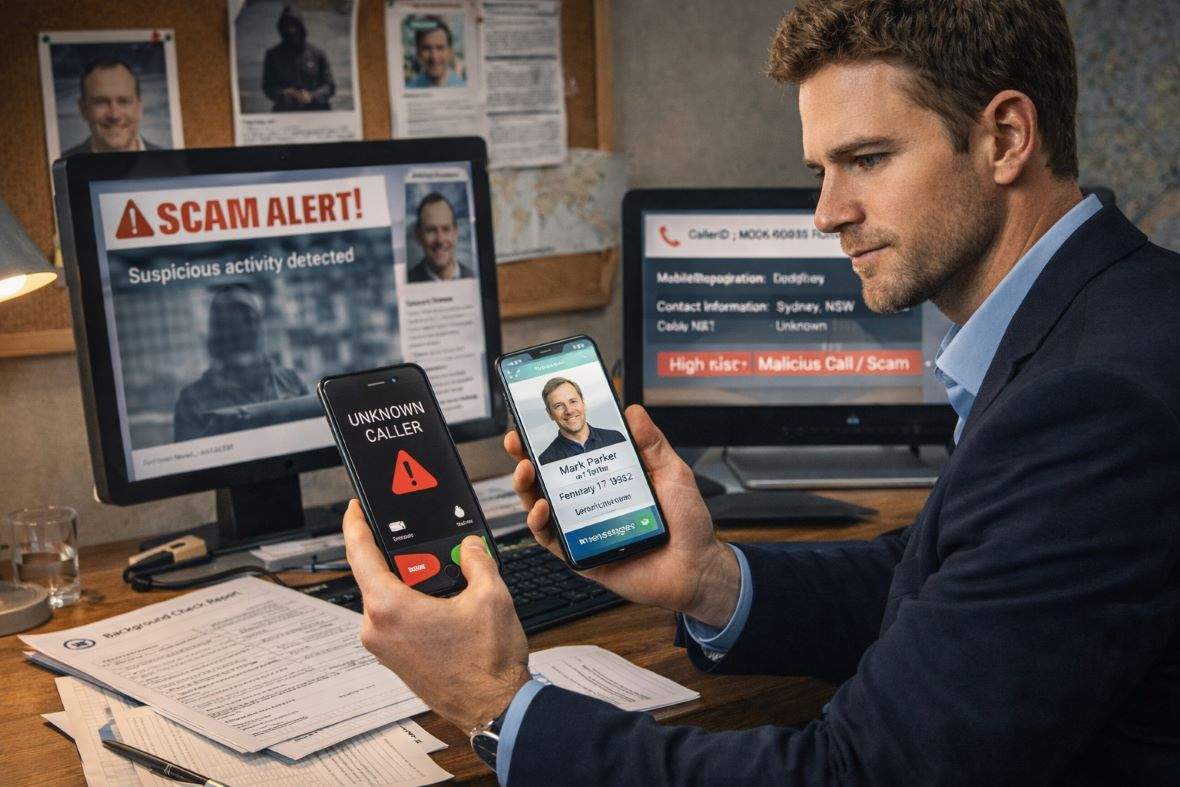
Have you ever had a phone number in your hand and worried it might be connected to something bad, like a scam or someone bothering you? Tracking that number might sound like something you see in movies, but it’s really about following the rules and doing smart detective work, especially in New South Wales. If you’re concerned, contacting a Private Investigator Sydney could provide the expertise needed to uncover the truth and ensure your safety.

What “tracking a phone number” really means in Sydney in 2026

When you engage a professional investigator, ditch the idea of them accessing telecom provider databases or planting spyware. That’s outside the legal boundaries for private citizens and agents. In 2026, a successful phone number investigation balances data collection with strict adherence to NSW privacy and surveillance laws.

What a Private Investigator Sydney can do legally (and what they can’t)

The core of any effective investigation revolves around consent and public domain research. You need to know the practical boundaries so you don’t contaminate your evidence before it even starts.

A reputable Private Investigator Sydney professional can perform several useful functions. They can investigate location data for devices you lawfully control (like tracking a company-issued phone if you own the business and proper notice was given). They will use advanced open-source research techniques to tie the number to public profiles or known records. Furthermore, they build timelines based on verifiable information and conduct physical surveillance in public places based on patterns suggested by the numbers.

Conversely, they cannot hack into a private phone, guess passwords, install unauthorized spyware, or intercept private communications. Copying data from a phone you don’t own or planting a tracker on a personal vehicle you don’t control is illegal under NSW law. The entire case hinges on remaining within the law to ensure any evidence created is admissible, whether for HR action or court proceedings.

The key laws that shape phone number investigations in NSW

The actions an investigator can take are heavily regulated. The primary concern involves privacy legislation and surveillance device laws. For instance, the Surveillance Devices Act strictly controls when and how a device can be used to track movement or record conversations; PIs don’t have the immunity that police forces sometimes possess. Computer crime laws prohibit unauthorized access to digital systems. Because of these rules, you’ll notice that any competent investigator will spend significant time confirming ownership and consent upfront. They must establish lawful authority before they even start looking at connection points (not just to keep their license valid but to keep your case viable).

How a Private Investigator Sydney investigates a phone number step by step

How Private Investigators in Sydney Track a Phone Number in 2026. Private investigators in Sydney tracking phone numbers in 2026 using lawful methods, digital analysis, and investigative techniques.

A formal investigation moves methodically, transforming an abstract number into actionable intelligence. This structured approach protects you and ensures professional standards are met.

Step 1: your intake and consent check (so the case stays legal)

Your first meeting sets the professional tone. The investigator needs to know the facts that allow them to proceed lawfully. They will ask you directly: who owns the phone, what is your relationship to the person or entity using it, and what is the specific, verifiable reason you need this investigation? Safety concerns always take priority here.

You should be prepared to provide any evidence you already possess legally, such as:

  • * Call logs you accessed through your own provider or device
  • * Screenshots of threatening messages you received
  • * Voicemail timestamps and recordings
  • * Documentation, like written workplace policies if the phone belongs to your firm

In many personal matters, obtaining written consent from the phone’s user, if possible, is the simplest pathway forward.

Step 2, number intelligence (reverse lookups, OSINT, and lawful databases)

Once the legal foundation is secure, the investigative research begins. Investigators look for links between the number and a physical person or registered entity without attempting intrusive access. This involves diligent work with public sources.

Examples include checking the number against business directories, reviewing public court or company registration filings where the number might be listed, searching scam and known caller ID reporting websites, and looking for the number attached to publicly viewable social media profiles. A key differentiator for quality services is a commitment to using only legitimate, lawfully obtained data, actively avoiding any hint of illegal data scraping or stolen information. If you seek help from a firm that specialises in various aspects of investigation, you can learn more about Sydney Private Investigations to see an ethical approach.

Step 3, turning phone clues into real-world proof (surveillance and timelines)

The research phase provides clues; the fieldwork confirms them. The investigator links the times the phone was active (based on your provided call logs or previous contact times) to real-world movements. This often involves discreet physical surveillance.

The outcome isn’t just a theory; it’s documented proof, including site photographs, precise dates, times, and observational notes. This clean documentation is paramount. When evidence needs to support an HR disciplinary hearing or court action, establishing a clear chain-of-custody for every piece of collected data is what makes the investigator’s report valuable (unlike random suspicions collected on your own).

Common cases where phone number tracking comes up, and what outcomes you can expect

How Private Investigators in Sydney Track a Phone Number in 2026. Private investigators in Sydney tracking phone numbers in 2026 using lawful methods, digital analysis, and investigative techniques.

Phone number issues rarely exist in a vacuum; they are usually symptoms of broader problems, such as harassment or corporate misconduct. Understanding potential outcomes helps manage expectations.

Harassment, threats, and unknown callers

When dealing with someone targeting you through unknown calls or texts, the PI’s role is documentation and pattern recognition. They can help you identify the likely identity behind the threat by cross-referencing public data with the call pattern. You receive a thoroughly prepared report detailing dates, times, and potential leads; a clean document you can present to your lawyer or the police. Remember, a PI is not law enforcement; they cannot force a telecom provider to release subscriber information without proper legal authority, such as a court order.

Family law, infidelity, and child safety situations

Scenarios involving separation or custody require the highest level of privacy care. A PI cannot simply install tracking software on a partner’s phone without their consent, as this can open you up to criminal liability. Instead, the investigation focuses on lawful verification of identities associated with suspicious numbers using authorised research methods. They observe behaviour through public surveillance to corroborate alibis or routines. Where child safety is concerned, discussions around consent for tracking are extremely sensitive. Professionals will always advise obtaining expert legal guidance before proceeding. If you are seeking help for sensitive personal matters, understanding the procedures of discreet private investigator surveillance services can clarify what evidence is both obtainable and usable.

Workplace investigations and company-owned phones

When an employee uses a company phone inappropriately, the investigation shifts towards policy compliance. If management has clear, written policies detailing monitoring, and the employee was properly notified, the PI can analyse tracking logs or movement data supplied directly by the business. The goal is fairness; the investigator confirms actual misuse through impartial reporting and links device activity to observable actions. This evidence must be solid enough to withstand internal reviews or unfair dismissal claims.

Final Thoughts: Tracking a Phone Number 

In 2026, tracking a phone number professionally means you’re hiring a researcher and a field operative, not a hacker. A Private Investigator Sydney succeeds by utilizing consent-based tools, exhaustive open-source investigation, lawful database searches, and meticulous fieldwork when necessary. This approach ensures the information gathered remains ethical and useful for legal or professional decisions. Your responsibility is to protect your case by staying within legal limits from day one. If you want help, prepare your basic evidence (screenshots, dates, and call logs you can access) and be ready to discuss ownership and consent. Starting on solid ground ensures the investigation provides the clarity you need.

Frequently Asked Questions

Can a private investigator in Sydney track a phone number in real time?

No. A private investigator in Sydney cannot track a phone’s real-time location like police or telecom providers. Instead, they lawfully analyze call patterns, public records, consent-based data, and real-world surveillance to identify who is using the number and how it connects to broader activity.

Is it legal to investigate a phone number in NSW in 2026?

Yes, but only within strict legal limits. Investigations must comply with NSW privacy, surveillance, and computer access laws. A private investigator can use public information, consent-based data, and lawful observation, but cannot hack phones, intercept messages, or access telecom databases without court authority.

What information should I provide before a phone number investigation starts?

You should provide any lawful evidence you already have, such as call logs, text screenshots, voicemails, timestamps, and proof of phone ownership or consent. Clear documentation helps ensure the investigation stays legal and produces evidence that can be used for HR, legal, or safety purposes.

How Sydney Private Investigators Handle Cheating Surveillance

How It Works (and What You Can Expect)

When it comes to uncovering the truth and finding answers, nothing compares to the expertise of private investigators in Sydney. With the increasing demand for trustworthy information and personal safety, whether it’s infidelity inquiries, corporate investigations, or background checks, experienced private investigators in Sydney have the skills and resources to handle complex situations. In this article, we will explore the various aspects of private investigation services available in Sydney and how they can provide you with the clarity and peace of mind you deserve.

It also has limits. Surveillance can show patterns, meetings, and movements, but it can’t read minds, force confessions, or legally access private messages. Every case is different, and the goal is clarity, not conflict, so you can decide what comes next with a steady head.

What cheating surveillance in Sydney really looks like

Private Investigation Sydney Cheating Surveillance. Private investigation services in Sydney conducting discreet cheating surveillance to gather lawful evidence and provide relationship clarity.

Cheating surveillance is simple in concept: an investigator observes and records lawful, visible activity to confirm or rule out a suspected relationship. In practice, it’s less like a movie and more like careful note-taking, patience, and timing.

Most infidelity surveillance focuses on patterns that can be checked against what you’ve been told:

  • Regular time windows (after work, lunch breaks, gym “sessions,” weekend errands)
  • Meeting points (cafes, hotels, parks, residential streets, venues)
  • Time stamps that show when your partner arrived, left, and where they went next.
  • Contact behaviour (who they meet, how long they stay, whether there’s physical affection in public)

In Sydney, routine matters because the city’s pace creates easy cover. Commuting delays, late client dinners, and “quick trips” can all sound normal. Surveillance cuts through the noise by answering one question: Do the actions match the story?

Why does that matter so much? Because uncertainty keeps you stuck. When you have clean, documented facts, you can stop cycling between hope and suspicion. Some people feel relieved when nothing is found, even if they still need to work on trust. Others get confirmation, and while it hurts, it ends the limbo.

If you’re still trying to identify warning signs of infidelity, it can be helpful to use a practical checklist, such as this one for spotting infidelity in Sydney. The goal is not to “catch” someone for the sake of it, but rather to gain a clearer understanding of what is actually happening.

Typical cheating case triggers that a PI hears, and what they mean

Private Investigation Sydney Cheating Surveillance. Private investigation services in Sydney conducting discreet cheating surveillance to gather lawful evidence and provide relationship clarity.

You might recognise a few of these. Each can have an innocent explanation, which is precisely why surveillance looks for repeatable patterns, not one-off moments.

  • Late nights that don’t add up: It could be workload or stress, but vague details and shifting stories often signal avoidance.
  • Sudden phone privacy: A new passcode might be about privacy in general, but panic when you walk into the room can suggest hiding contact.
  • Changed routines without an apparent reason: People do start new hobbies, but “new habits” that appear only on certain days can be a cover.
  • Unexplained spending: It might be gifts or personal splurges, but repeated charges tied to specific areas can point to meetings.
  • New “work” travel: Business trips happen, but missing receipts, odd gaps, or a refusal to share basic plans can be red flags.
  • Friends covering or acting strange: A friend might be staying out of it, but scripted answers and awkwardness can mean involvement.

Surveillance doesn’t judge these triggers. It checks whether they form a consistent track that you can verify.

What evidence can you usually expect from surveillance (and what you won’t)

A professional surveillance case is built around documentation you can understand quickly. You’ll often receive:

  • Written surveillance logs in time order (arrivals, departures, movements)
  • Time-stamped photos that show key moments and locations
  • Short video clips were applicable (public interactions, meet-ups, departures)
  • Vehicle details (make, model, colour, license plate where lawful and visible)
  • Location notes that connect the timeline

When considering private investigation services, it’s essential to understand what you should expect from a legitimate operator. A licensed investigator will not engage in activities such as hacking phones, guessing passwords, installing illegal tracking devices, or trespassing onto private property. Instead, the focus of these services is typically on observable behaviour in public spaces rather than accessing private messages or secret recordings within someone’s home. Being clear about these boundaries can help ensure that you choose a reputable investigator who operates within the law.

How a private investigator runs a cheating surveillance case, step by step

Private Investigation Sydney Cheating Surveillance. Private investigation services in Sydney conducting discreet cheating surveillance to gather lawful evidence and provide relationship clarity.

A cheating surveillance case works best when it’s planned like a small project: clear goals, brilliant timing, and clean reporting. You’re not paying for endless hours; you’re paying for targeted observation that answers your questions.

Most cases follow a predictable path.

First, you talk through what’s been happening and what you need to know. Next, the investigator plans the most likely time windows and locations based on routine, not hunches. Then surveillance is conducted in short shifts or targeted blocks, and the results are documented with supporting media.

A simple timeline example helps set expectations:

  • Weekend focus: one Saturday afternoon to evening, then a Sunday morning to midday if the behaviour tends to show up on weekends.
  • Weekday pattern check: three shorter shifts, such as two weeknights and one early morning, based on “late work” claims.

Sometimes the first shift confirms nothing. That’s still a result. Other times, it shows a clear pattern, and you may choose to stop early because you already have enough clarity.

Intake and planning: goals, risk checks, and the best times to watch

In your first consult, you’ll usually share practical details, not your whole relationship history:


Who and what: your partner’s name, recent photo, vehicles used, and typical hangouts.
Routine: normal work hours, gym schedule, “regular errands,” and typical routes.
Your concerns: what changed, when it started, and which days feel most suspicious.


A good investigator also assesses risk factors, such as the likelihood of confrontation or violence, and plans with safety in mind. They choose dates and time windows that match the behaviour you described, then work to stay unnoticed.

You can help without tipping off your partner by keeping your prep quiet and normal. Don’t suddenly ask for receipts, don’t start tracking them yourself, and don’t change your own routine in a way that signals panic. Write your observations down privately, including dates and times, then share them during intake.

Surveillance in the field: staying discreet while collecting clear facts

In the field, the investigator’s job is to observe from lawful positions and record what’s visible without drawing attention. That means filming or photographing in public where it’s permitted, taking accurate notes, and keeping the timeline clean.

In some cases, a team may rotate to reduce the chance of being noticed. If your partner changes plans, the investigator adapts, but they won’t take risks that create trouble or cross legal lines. Surveillance rewards patience. One quiet hour can feel pointless, then the next ten minutes can confirm the entire pattern.


You should also expect professionalism around discretion. A serious investigator won’t share your case details casually, and they’ll avoid actions that escalate the situation at home.

After surveillance: reporting, next steps, and how you use the results

After each shift (or at the end of the planned block), you receive findings organised so you can follow them without interpretation games:

  • A chronological report written in plain language
  • Photos and videos are labelled by date and time
  • Notes that connect movements to locations and meet-ups


Results should be delivered securely, as they are sensitive. Then you decide what to do with the facts. Many people choose one of the following steps: a direct conversation with boundaries, counselling, seeking legal advice, or practical planning for separation.

A private investigator doesn’t give legal advice. Their role is to provide reliable information, so your next move is based on evidence, not anxiety.

Final Thoughts

Cheating surveillance in Sydney works by observing lawful, public behaviour and documenting patterns that either confirm your concerns or clear them. You can expect time-stamped logs, photos, and video clips, plus a report you can follow. You should also expect firm limits, no hacking, no trespassing, and no shortcuts.


A careful plan matters because it helps replace guesswork with clarity. Gather your key details, write down your goals, and speak with a licensed professional who can tell you what’s possible in your situation. When you know what’s true, you can finally choose your next step with a steady mind.


Background Investigation Helps People Make Informed Choices

A Background Investigation is what you do when the stakes are real: hiring a senior employee, starting a serious relationship, choosing a business partner, or preparing for a legal matter. It’s less like a quick Google search and more like inspecting a used car before you drive it off the lot. You’re looking for proof, not promises. You can learn a lot about someone in five minutes online. You can also learn the wrong things, fast.

Sometimes, standard databases and “instant reports” are enough for basic screening. Other times, they miss key records, confuse people with similar names, or pull old data without context. That’s when working with a Private Investigator can be the safer option, because a professional focuses on verified facts, proper documentation, and lawful methods.

What a Private Investigator Does for Background Investigation

A professional Background Investigation isn’t just about finding dirt. It’s about reducing uncertainty.
When you hire a Private Investigator, you’re paying for a disciplined process that checks claims, tests consistency, and spots patterns that don’t fit. A good investigator treats the work like building a timeline: each record, statement, and document should support the story or raise a straightforward question.

You will receive a higher standard of reporting. Details matter, dates are essential, and sources are crucial. If your case could lead to court or a workplace dispute, having proper documentation can be just as important as the facts themselves. To fully grasp the broad responsibilities of a private investigator, it’s essential to understand the different roles they play.

Verifying Education and Work History

Resumes can be honest and still be misleading. A title might be inflated, dates might be “rounded,” or a degree might be described in a way that sounds better than it is.
A Private Investigator can verify education and employment claims using lawful sources and, when available, direct confirmation methods. This can include checking whether an institution exists as stated, whether the qualification matches the claim, and whether the work history holds together when you compare roles, timelines, and references.
Why does this matter? Because trust is built on specifics. If someone lies about something easy to check, you have to ask what else they’ll bend when the pressure rises. In business, a small lie can lead to significant losses. In personal life, it can lead to years of regret.

Checking Court Records and Legal Past

Court records are often public, but they aren’t always easy to find. Many people assume everything shows up on the first page of search results. It doesn’t.

A Private Investigator knows how to look across multiple jurisdictions and record systems, and how to confirm you’ve found the right person. That last part is where DIY searches often fail. Similar names, old addresses, and missing middle initials can create false matches that damage reputations or cause you to make the wrong call.

A proper Background Investigation may cover criminal and civil court history, restraining orders where accessible by law, bankruptcies or insolvency indicators (when relevant), and patterns like repeated disputes with partners, employers, or creditors. The goal isn’t to label someone based on a single event; it’s to understand risk through context and repetition.

Why Professional Background Investigations Beat DIY Searches

Professional background investigations providing deeper, verified insights than DIY online searches through lawful methods and expertise.

DIY background checks can feel like ordering fast food: quick, cheap, and satisfying in the moment. The problem is you don’t always know what you didn’t get.

A professional Background Investigation is built around accuracy, lawful access, and transparent decision-making. Investigators also recognise that records are messy. People move, change names, use nicknames, run businesses through related entities, or leave a trail that only makes sense when you connect the dots.

Here’s what a pro typically adds that a $20 website can’t.

Access to Special Databases and Tools

Professionals often use paid data tools, structured search systems, and specialist methods to validate identity and relationships. That can include advanced data analysis to spot links between people, addresses, phone numbers, or companies that don’t show up in a basic search.

In more complex matters, an investigator may also coordinate with specialist services (such as surveillance support or technical expertise) when it’s lawful and relevant. The key is that these services should have clear procedures, defined roles, and proper controls around sensitive information, because sloppy handling can ruin a case and expose you to risk.

It also helps that trained investigators think in “proof standards.” If the result needs to support a formal complaint, a workplace decision, or legal action, the investigation should be planned with that standard in mind, not patched together after the fact.
If your situation involves carefully choosing methods, this breakdown of restrictions on private investigation activities can help you set realistic expectations.

Legal Obedience and Proper Handling

A professional investigation isn’t only about what you find, it’s about how you find it.

Investigators should operate in accordance with relevant laws, regulations, and codes of conduct. That means acting reasonably, making defensible decisions, and documenting actions so the process can be explained later. When privacy laws apply (in Australia, that includes the Privacy Act 1988), a compliant approach matters because the wrong step can create legal trouble or make information unusable.

Good practice also includes:

  • Planning before action: deciding what you’re trying to prove, what sources are lawful, and what steps won’t compromise the matter.
  • Evidence handling discipline: keeping records organised, tracking sources, and maintaining a transparent chain of custody for both physical and digital material.
  • Disclosure awareness: if a matter could go to court, disclosure duties can apply, and you don’t want surprises because material was lost, mishandled, or never recorded.
  • Quality checks: internal reviews (self, peer, supervisor) at set points, plus periodic independent audits in higher-risk environments, help catch mistakes early.

There’s also a human factor. In high-stakes work, best practice often assigns more than one investigator so decisions don’t rely on a single viewpoint. That reduces bias and improves reliability, mainly when interpretations differ.

Final Thoughts Behind the Background Investigation

Final reflections on background investigation outcomes, highlighting the value of verified facts and informed decision-making.

A Background Investigation protects you from making a big decision based on a small set of untested facts. It helps you confirm identity, verify claims, and spot patterns that change how you assess risk.

If you’re relying on the results for hiring, a relationship, a business deal, or anything that could end up in a dispute, a Private Investigator can give you a cleaner process and more dependable findings than DIY searching.

What is a background investigation, and how is it different from a basic background check?
A background investigation goes beyond quick online searches or instant reports. It focuses on verifying identity, confirming claims, and reviewing records in context using lawful methods, rather than pulling untested or outdated data.

When should I consider hiring a Private Investigator for a background investigation?
You should consider hiring a Private Investigator when the stakes are high, such as hiring a senior employee, entering a serious relationship, choosing a business partner, or preparing for a legal or workplace matter where accuracy is critical.

Can online background check websites give reliable results?
Online databases can be helpful for basic screening, but they often miss records, confuse people with similar names, or lack context. A Private Investigator checks accuracy, resolves conflicts, and confirms the information belongs to the correct person.

Workplace Investigation Processes for Modern Australian Businesses

Step-by-step workplace investigation process in Australia, including evidence gathering, interviews, documentation, and fair outcomes

In the modern workplace, maintaining integrity is more than just a corporate goal; it’s a necessity for survival. A workplace investigation is a formal, systematic process designed to gather facts regarding allegations of misconduct or internal disputes. Whether you’re dealing with a missing inventory report or a serious claim of harassment, the goal remains the same: finding the objective truth. It isn’t about jumping to conclusions or dealing out punishment; it’s about building a factual foundation so that management can make informed, fair decisions.

When internal tensions rise or sensitive data disappears, you might feel overwhelmed. This is where bringing in a Private Investigator becomes a strategic move. By using an external expert, you move the process away from internal office politics and toward a neutral, professional standard. Common triggers for these inquiries include theft, complex fraud, non-compete violations, or suspicious injury claims. Throughout this guide, you’ll learn the clear, practical steps to handle these situations with a calm, methodical approach.

When you should hire a Private Investigator for a workplace investigation

Knowing when to step back and hire a professional can save your business from significant legal and reputational damage. A Private Investigator offers a level of objectivity that an internal HR team can’t provide, especially when the subject of the investigation is a high-level executive or a long-tenured employee. While HR handles daily personnel issues, a PI specialises in uncovering hidden evidence and conducting discreet surveillance. Their primary focus is protecting the business and its people by delivering reliable facts that can withstand scrutiny in a courtroom or tribunal.

Common cases a workplace Private Investigator handles

  • Theft and Inventory Loss: Investigating physical goods moving out the back door or discrepancies in warehouse stock levels.
  • Expense Fraud: Identifying employees who submit forged receipts or claim personal travel as business expenses.
  • Time Theft: Tracking staff who are consistently absent during working hours while claiming full pay.
  • Fake Sick Leave: Verifying if an employee claiming a long-term injury is actually performing manual labour elsewhere.
  • Harassment or Threats: Gathering evidence in cases where one person’s word is pitted against another’s, requiring neutral witness interviews.
  • Non-Compete Concerns: Checking if a former or current employee is secretly sharing trade secrets with a competitor or moonlighting.
  • Data Leaks: Investigating the unauthorised transfer of sensitive customer lists or intellectual property.

While these examples are often best handled by a PI, it’s important to remember that understanding PI roles and legal constraints is vital. Some minor behavioural issues are better left to HR, but criminal or high-stakes financial matters benefit from specialised investigative support.

Signs your case needs outside help

You should look for specific red flags that indicate an internal inquiry isn’t enough. High-dollar losses or immediate safety risks are the most obvious triggers. However, you should also consider a professional if there’s an apparent conflict of interest within management or if your internal records are too disorganised to provide a clear picture. Fast action is essential because evidence is often perishable. Video surveillance loops may be overwritten in days, and login logs can disappear. A professional ensures that this digital footprint is preserved before it’s too late.

How a workplace investigation works, step by step

 Workplace investigation processes used by modern Australian businesses to address misconduct, disputes, and compliance issues lawfully.

A successful investigation follows a structured path. It begins with a clear plan and ends with a detailed report, ensuring that every action taken is fair and legally compliant. You must prioritise the chain of custody for all evidence gathered. This means keeping a meticulous log of who found the evidence, where it was stored, and who had access to it. By following  professional evidence-gathering solutions, you ensure the results are usable if the matter ever reaches a judge or an insurance company.

Intake, scope, and a plan you can defend

The first phase involves defining precisely what you’re looking for. You need to establish the allegation, the timeframe, and the specific individuals involved. A plan you can defend sets clear milestones and identifies which systems, such as email or door access logs, need to be reviewed. Whenever possible, it’s best practice to involve two investigators. This approach reduces the risk of personal bias and provides a second set of eyes to maintain the integrity of the findings.

Gathering information the right way

Information gathering typically involves three pillars: interviews, records, and surveillance. During interviews, investigators take formal statements from witnesses and persons of interest. They also review business records and emails, provided these are company-owned and align with your internal policies. Lawful surveillance can be used to observe behaviour without tipping off the subject. Remember that rules vary significantly between jurisdictions, so always align your plan with legal counsel to avoid breaching privacy limits or recording laws. For example, skip tracing for workplace investigations might be necessary if a key witness or a former employee has left the area.

Evidence handling, documentation, and disclosure basics

Properly labelling and securing evidence is the difference between a successful outcome and a dismissed case. You must keep all relevant material, even if it doesn’t support your initial theory. This transparency is part of your duty of disclosure. If you encounter legally sensitive material, such as communications between an employee and their lawyer, you must use a “quarantine” process. This keeps those items separate until a legal professional can review them, ensuring you don’t accidentally compromise privileged information.

Choosing the right Private Investigator and protecting your business

Choosing the right private investigator to protect your business through lawful investigations, risk management, and evidence-led decisions

Selecting the right partner is just as important as the investigation itself. You need someone who is not only licensed but also has specific experience with corporate settings. Their reporting style should be clear and concise, and they must demonstrate a high standard for data security. A good PI doesn’t work in a vacuum; they coordinate closely with your HR and legal departments to ensure the investigation aligns with the broader business goals.

Questions to ask before you sign an agreement

Before you hire a Private Investigator, you should have a list of questions ready to ensure they’re the right fit for your specific needs:

  1. Are you currently licensed and insured to work in this jurisdiction?
  2. Can you provide examples of similar workplace cases you’ve handled?
  3. How do you ensure the chain of custody for physical and digital evidence?
  4. What is your protocol for storing sensitive company data?
  5. What is the expected timeline for a case of this complexity?
  6. Will you be doing the work personally, or will it be subcontracted?
  7. How do you identify and handle potential conflicts of interest?
  8. What specific deliverables will be included in the final report?

Cost, timelines, and what you should get at the end

Most investigators work on an hourly rate or a retainer basis. The cost and timeline will depend heavily on the case’s complexity. A simple theft inquiry might take a week, while a deep-dive fraud investigation could span months. At the end of the process, you should receive a professional package containing a written report, a list of exhibits, and any relevant photos or logs. To keep things moving, assign one point of contact within your company and stick to a regular communication schedule.

Conclusion

A successful workplace investigation relies on three core pillars: fairness, meticulous documentation, and strict legal compliance. By bringing in a Private Investigator, you ensure that the facts are gathered without the cloud of internal bias. This professional approach not only uncovers the truth but also protects your company from future litigation. If you’re facing a crisis now, your next steps are simple: write down the specific allegation, preserve any existing records, and limit internal discussion to a need-to-know basis. Always consult with your HR or legal counsel before conducting your first interview to ensure you start on the right foot.

AI Raised the Bar for Private Investigators in 2025

In 2025, AI got very good at making you feel productive. In minutes, you can pull names, map relationships, summarise posts, and sketch a timeline that looks convincing.

But none of that is proof.

That’s why lazy investigations didn’t disappear; they just changed shape. Lazy doesn’t mean you didn’t work hard. It means you skipped proof steps, you treated “found online” as “confirmed,” or you didn’t test what the data claimed.

Suppose you’re a Private Investigator (or you hire one), you’ll get the most value from AI when you treat it like a fast assistant, not a fact source. You’re about to learn what high-performing teams did differently in 2025: simple habits built around verification, field checks, and corroboration.

What AI changed in private investigations in 2025, and what it still cannot prove


AI sped up the front end of investigations. It became easier to collect leads and organise them into a format that was readable.

You can now:

  • Spot possible aliases and name variants fast.
  • Pull a rough address history from mixed sources.
  • Compare vehicles mentioned across posts, photos, and old listings.
  • Build a draft timeline from messages, receipts, and screenshots.

The trap is confusing finding information with proving facts.

A few simple examples:

  • A name match in a database is not identity. Two people can share a name, age range, and suburb.
  • A social post can suggest a location, but it doesn’t confirm presence on that date (or who actually posted it).
  • A “current address” might be a 3-year-old update that keeps getting copied forward.
  • A vehicle photo might be recycled, edited, or posted by someone else.

AI also carries risks you can’t ignore: made-up citations, wrong identity merges, outdated snapshots, and bias from incomplete data. When you’re working real cases, the standard isn’t “sounds right,” it’s “stands up when challenged.”

Strong investigative work also depends on habits that may seem tedious but protect you later: documented decisions, ethical conduct, and careful handling of sensitive information. You keep records in a way that supports later review, you store material securely, and you plan early for what may need to be disclosed or explained.

Before you trust an AI output, run this quick check:

  • Source: Do you know where the claim came from (not just the summary)?
  • Recency: Can you confirm the date it was true?
  • Identity: What identifiers link it to the right person?
  • Independence: Do you have a second source that didn’t copy the first?
  • Record: Have you noted what you accepted, rejected, and why?

AI is a lead generator, not a witness

Use AI to move faster, not to conclude faster.

Good uses in a Private Investigator workflow:

  • Intake sorting: Group tips by theme (finance, relationships, travel, workplace).
  • Draft timelines: Turn messy notes into a structured sequence you can test.
  • Question prompts: Suggest what to ask next in an interview or statement.
  • Link analysis: Flag possible associations that you then verify independently.

Danger zones that create “busy work” instead of real results:

  • Treating a single database hit as a confirmed identity.
  • Using a scraped profile as proof of employment or residence.
  • Quoting an AI summary when you can’t produce the underlying source.
  • Building a case on “pattern matching” when you haven’t checked for same-name errors.

If you want a sense of what a disciplined, real-world approach looks like in practice, compare it to the methods used to locate people, where every lead still has to be validated:

The new baseline is transparency, notes, and defensible decisions

High-performing teams in 2025 treated every case as if a client, a lawyer, or a court were reviewing it.

You document:

  • Why did you act on a lead?
  • What did you check first, and what did you rule out?
  • What remains unknown, and what would change your view?

You also build in review points. A quick supervisor check at key milestones can stop a wrong-identity spiral early. After closing, you capture lessons learned so the following case starts stronger, not just faster. Good notes don’t slow you down; they keep you from having to explain gaps later.

How top Private Investigator teams verified AI leads, step by step

Top private investigator teams verifying AI-generated leads step by step using lawful checks, documentation, and evidence standards.

When you’re under pressure, you need a repeatable workflow you can run without overthinking. In 2025, the best teams came back to three pillars: verification, field checks, and corroboration.

Here’s a practical flow you can apply to your next matter:

  1. Write the claim in one sentence (example: “Subject lives at X address”).
  2. List what would prove it (a record, observation, statement, or a combination).
  3. Identify the risks (same-name, old data, spoofed accounts, motivated witnesses).
  4. Confirm identity first (before you confirm activity).
  5. Run a field check when it matters (a screen can’t show context).
  6. Corroborate key facts across independent sources.
  7. Log decisions in plain language (what you accepted, rejected, and why).
  8. Store sensitive material securely and limit access to those who need it.

For higher-risk matters (fraud, serious misconduct, high-conflict family disputes), top teams often used a “two-investigator” integrity approach. One person drives the plan, another tests assumptions and re-checks identifiers. It reduces bias and catches simple mistakes before they become expensive ones.

Mini case example (fictional):
AI flagged “Michael R.” as working at a warehouse tied to an employee theft claim. The profile photo matched a staff directory image, and the suburb lined up. Verification saved the case. The team confirmed that the directory image was from 2021, that a different account had reused the photo, and that there were two Michael R.’s with similar ages. A quick field check at shift change and a separate record check confirmed the subject never worked there. The investigation pivoted to the correct employee without accusing the wrong person.

Verification that holds up, source quality, identity matching, and time stamps

Use this micro-process (keep it tight and consistent):

  1. Capture the exact output (screenshot or export) and note the date.
  2. Identify the source type (official record, open web, paid database, witness, device data).
  3. Confirm identifiers: full name variants, age or DOB range, phone, email, and known associates.
  4. Check recency: when was it last updated, and how often is it copied?
  5. Look for conflicts: does anything contradict it (address overlap, impossible travel times)?
  6. Test for same-name traps: similar names, family members, common surnames.
  7. Watch for recycled media: reverse image checks, repeated captions, mismatched dates.
  8. Log your decision: accepted, rejected, or “unconfirmed pending field check.”

A simple rule keeps you honest: no single-source conclusions on any claim that could harm someone’s reputation or change a legal outcome.

Field checks that close the gap, eyes on location, routine, and context

A field check is anything that confirms the real-world picture matches the claim, within local rules and safety boundaries.

It can include a site visit, discreet observation, local inquiries where appropriate, and photos that are clearly date and time-stamped.

Before you go, you think about risk: who might react badly, what your exit plan is, and what you will not do.

Three quick examples:

  • Residency: Confirm signs of occupancy, consistent routines, and whether the person actually lives there.
  • Workplace patterns: Validate shift times, entry points, and whether the subject is present as claimed.
  • Vehicle presence: Confirm a vehicle is linked to a location and time, not just an online mention.

Corroboration habits that separate strong investigations from weak ones

Corroboration habits in private investigation that strengthen evidence, verify facts, and separate reliable cases from weak findings.

Corroboration is how you turn a lead into a finding. You triangulate a claim using sources that don’t depend on each other, so one error doesn’t contaminate everything.

In practice, you build a clean timeline:

  • Each entry has a source.
  • Each source has a date.
  • Each key claim has at least one independent confirmation.

When facts conflict, you don’t “average them out.” You label the conflict, check which source is strongest, and keep both versions visible until you resolve it. You also keep your records organised so they can be reviewed later without guesswork, including what you expected to find but didn’t.

Red flags that signal you need deeper corroboration:

  • Only one source supports the key claim.
  • Dates are missing or vague (“around June”).
  • A source seems to copy another source.
  • The identity link is weak (same name, same suburb, no unique identifier).
  • The story only works if you ignore a conflict.

Triangulate every key claim using independent sources

Pick the top three claims that matter most, then require two independent confirmations for each.

Examples that fit everyday Private Investigator work:

  • Infidelity: time-stamped observation plus a separate record (booking, receipt, or verified location data).
  • Employee misconduct: access logs or roster records, plus field observation or an independent witness statement.
  • Fraud: document trail plus physical verification of address, business, or assets.
  • Missing persons: confirmed identity match plus a field check or direct contact verification.
  • Background checks: record checks plus confirmation of current activity (employment, residence, or known associates).

Independence is simple: if one source likely copied the other, it’s not independent.

Quality checks you can run before you report to a client

Before you send findings, run this pre-report check:

  • What do you know (facts only)
  • How do you know it (sources, dates, identifiers)
  • What you believe (inferences that are clearly labelled)
  • What you couldn’t confirm (and why)
  • What is time-stamped (photos, notes, logs, records)
  • Who reviewed it (peer review for higher-risk cases)

Separating facts, inferences, and opinions keeps your report clean and you credible when the questions start.

What Really Matters

AI didn’t replace you. It raised the bar and punished sloppy work that had once slipped through. In 2025, the strongest Private Investigator teams won for the same reason they always have: they verified identity and recency, they ran field checks to close the reality gap, and they corroborated claims with independent sources.

Pick one active case this week and apply the workflow to it. Document every decision in plain language. Then confirm at least one key claim in the field. When you do that consistently, AI becomes a speed tool, not a shortcut that breaks your case.

A Year in Review of 2025’s Biggest Trends in Private Investigation

On January 1, 2025, you might have imagined a private investigator specialising in private investigation as someone sitting in a dark car with a long camera lens and a pile of crumpled paper files. By December 31, 2024, that image has shifted toward a professional who masters complex software as much as they master the art of the stakeout.

This year, the world of private investigation met a massive wave of change. You’ve seen tech tools move from experimental gadgets to daily necessities. Meanwhile, new laws forcedprivate investigators to rethink how they gather evidence. Understanding these trends helps you see how the industry protects people today. This review analyses how trade has evolved in the past year. You will discover how a modern professional combines data with human insight in an age where information is abundant, but context remains vital.

How Artificial Intelligence Transformed Private Investigation Work

Year-in-review of 2025’s biggest trends in private investigation, covering digital tools, legal shifts, and evolving investigative methods.

Artificial intelligence became the most talked-about tool for private investigation this year. In the past, searching for a person’s history meant visiting multiple government offices or scrolling through hundreds of web pages. You would wait days for paper records to arrive by mail. Now, specialised AI programs can scan millions of public records in seconds. These tools don’t just find names; they connect dots that a human eye might miss. If a subject used a different name ten years ago in another state, the software flags it instantly. This shift saved countless hours of grunt work in private investigation. It moved the focus from finding data to analysing what that data actually means for a case.

The difference between “old school” and “new school” methods in private investigation became clear in 2025. You used to see investigators with literal boxes of documents. Today, that paperwork is primarily digital. Sorting through thousands of emails or financial statements once took weeks. Now, a private investigator feeds those files into a secure system that highlights suspicious patterns or hidden bank accounts. You get results faster, and the cost of many investigations has dropped because manual labour has decreased. The machine serves as a guide, but the investigator’s skill in in-person interviews and judgment remains essential for interpreting the evidence effectively.

Sorting Through Data Faster Than Ever

One major lesson from 2025 is that social media is more than just a place for photos. In previous years, an investigator had to manually click through every post on a person’s feed. You would look for clues about where they lived or who they met. This year, new tools changed that process entirely. These programs can simultaneously find patterns across different platforms. They can spot if two people are frequently in the exact location, even if they never post a photo together. By looking at “likes,” tags, and check-ins, the software builds a map of a person’s life. This enables a private investigator to locate a missing person or a witness much faster than the methods used in 2023.

Verifying Real Evidence in a World of Fakes

As technology got better, so did the tricks used by dishonest people. Deepfakes became a massive hurdle for private investigation in 2025. You might see a video that appears to show a spouse cheating or an employee stealing, but it could be entirely fake. PIs now have to act as digital forensic experts. To show a video to a client or a judge, they must first prove its authenticity. In the past, people rarely questioned clear video evidence, but today, one must assume a video might be manipulated until verified. This process involves checking file metadata and searching for tiny digital glitches that reveal an AI-generated clip.

New Privacy Laws and Their Impact on Your Investigation

New privacy laws affecting private investigation practices, evidence collection, and legal compliance in modern investigations

The legal world threw some big curveballs at private investigators this year. Several new privacy laws went into effect, changing how personal data is handled in the private investigation industry. You might think that more tech means more access, but the opposite is often true. Laws now protect digital footprints more than ever before. This forced PIs to change their tactics to stay on the right side of the law. The big lesson of 2025 is that getting the data isn’t the most challenging part; doing so legally is what matters in private investigation. When investigators follow these rules, it reassures clients and upholds industry integrity.

Many states passed rules that limit who can buy or sell personal data, emphasising the impact of new privacy laws on private investigation. In the past, you could purchase a report on almost anyone for a small fee. Those databases are now more restricted. Investigators have to prove they have a “permissible purpose” to even look at certain records. This protects individuals from prying eyes, but it makes the PI’s job more complex. They have to keep detailed logs of why they’re searching for someone. This shift moved the private investigation industry toward more transparency. Professionalism is now measured by how well a PI follows these rules while still finding the answers you need.

Search Type 2020 Method 2025 Method
Vehicle Tracking Magnetic GPS tags are often used Requires specific legal warrants or owner consent
Phone Records Third-party data brokers Limited to public digital footprints and legal subpoenas
Public Records Local courthouse visits Secure, encrypted government portals with ID verification
Background Checks Simple database “pulls” Detailed reports requiring data privacy compliance

Stricter Rules for Tracking and Surveillance

Tracking a vehicle used to be a standard part of private investigation. In the early 2020s, many PIs used digital pings or GPS trackers with very few restrictions. That changed completely in 2025. New consent laws mean you can’t just stick a tracker on a car because you suspect something is wrong. In many cases, you need a court order or the owner’s permission. This led to a return to “active surveillance.” Instead of watching a dot on a map, investigators are back to following subjects in person. This requires more skill and patience. It also means that a PI’s ability to stay hidden while keeping eyes on a target is more valuable than any piece of hardware.

The Human Element in a High-Tech World

Private investigation balancing advanced technology with human judgement, empathy, and communication in a high-tech world

With all the talk about AI and data, you might wonder if humans are still needed in private investigations. The answer from 2025 is a resounding yes. Technology didn’t replace the private investigator; it just changed their chores. In fact, human intuition became more valuable this year. A computer can tell you that a man was at a specific coffee shop at 10:00 AM. It can’t tell you whether he looked nervous or was waiting for someone he feared. That’s where the human element comes in. A pro in private investigation knows how to read a room, sense a lie, and follow a gut feeling. These are things that code cannot replicate. The “human touch” is what turns a list of facts into a story that makes sense. You need a private investigator to talk to neighbours, build trust with witnesses, and convince people to share what they know. In an era where people are more guarded about their digital lives, they are sometimes more willing to talk to a real person who shows empathy. You’ve likely noticed that the more high-tech our world gets, the more we value real connections. The best trends of 2025 show that the most successful private investigation cases are solved by those who use tech to find clues but use their brains to solve the mystery.


Why Interviews Still Beat Algorithms

Private investigators search for truth, and one of the biggest lessons of the year is that this truth is often uncovered through a physical interview. Remote investigation became a trend because it’s cheaper and safer. You can send emails or use video calls to ask questions. However, savvy private investigatorsrealisedd that people lie differently over the phone than they do in person. You miss the sweat on a forehead or the tapping of a foot during a Zoom call. By meeting face to face, a private investigator uses their experience to catch subtle clues in body language. Technology provides the raw facts, but humans provide the context. A digital record might show a late-night phone call, but an interview reveals the emotion behind it.


Professional private investigators also spent 2025 focusing on “de-escalation” and communication skills. Since privacy laws are tighter, you can’t always bully your way to the information you want. You have to be a good listener. You have to know how to make a witness feel comfortable enough to open up. This shift back to “old school” social skills has been a refreshing part of the industry’s growth. It reminds everyone that, at the end of every data point, there is a real person with a real story in a private investigation.

Final Reflections on a Year of Change

Final reflections on a year of change in private investigation, highlighting evolving practices, challenges, and professional growth.

The private investigation field finished 2025 as a stronger and more professional industry. You’ve seen that AI is a powerful tool, but it’s not a replacement for a skilled human. It helps sort through the noise, but a person still has to make the final call. Legal ethics have also taken centre stage. Finding the truth is essential, but doing it the right way is what keeps an investigator in business. If you are looking to hire a pro, you now know to look for someone who balances high-tech skills with a strong moral compass.

The trends we saw this year suggest a bright future for those who can adapt. Whether you’re interested in joining the profession or you need to find answers to a personal problem, 2025 proved that the truth is still out there. It just takes a mix of modern math and classic detective work to find it. Stay curious, stay informed, and remember that no matter how much tech we use, the best tool in any investigation is a sharp, inquisitive mind.

Frequently Asked Questions (FAQ)

What specific technologies or software are leading the way in private investigation for 2025?

  • Key technologies include AI investigative tools, facial recognition software, cybersecurity tools, social media monitoring, and drones for surveillance.


How do private investigators ensure the accuracy and reliability of AI-generated data?

  • Private investigation ensures reliability through cross-verification of data, employing human oversight, keeping abreast of AI advancements, and adhering to ethical standards.


What training or skills do PIs need to navigate the new privacy laws successfully?

  • Private investigators need knowledge of privacy laws and ethical practices, data protection skills, analytical abilities, and proficiency in investigative technology.